
Belize dive planning often begins with the names of famous sites: the Great Blue Hole, Half Moon Caye Wall, Lighthouse Reef, Turneffe and the Belize Barrier Reef.
But another decision can shape the trip just as much:
Where will you stay in relation to the reef?
Travelers can base themselves on the mainland, on a populated island such as Ambergris Caye or Caye Caulker, or directly on an offshore atoll. Each option offers a different balance of transportation, amenities, flexibility and time near the dive sites.
This guide compares those choices fairly so you can decide whether an atoll-based diving stay fits the Belize experience you want.
Most visitors to Belize stay:
on the mainland
in Hopkins or Placencia
on Ambergris Caye
on Caye Caulker
or near larger tourism hubs
This is the most common style of Belize dive travel.
And for many travelers, it makes perfect sense.
Advantages of Mainland and Island-Based Diving
Mainland and populated island resorts usually offer:
For travelers who want:
…mainland or populated island stays are often the best fit.
Belize works very well for this style of travel.
But there’s a tradeoff many first-time visitors underestimate.
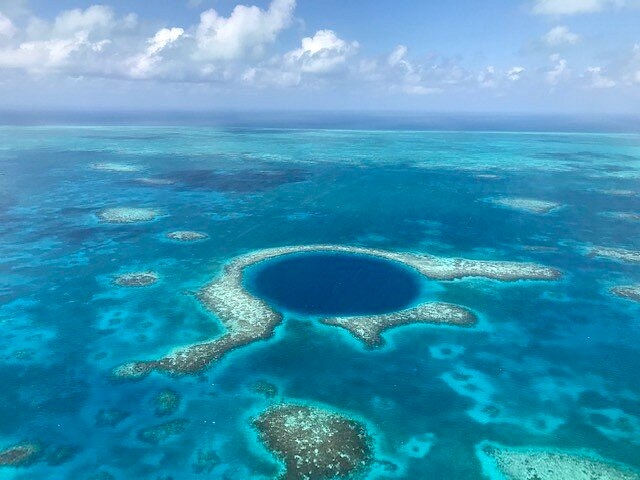
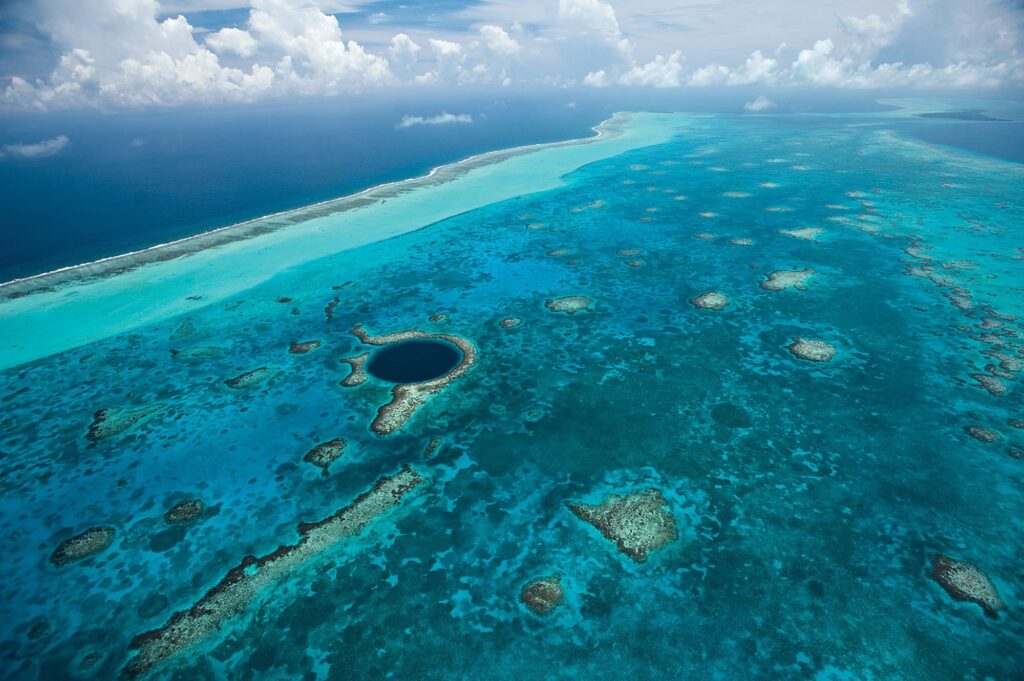
On a map, Belize’s reef system can appear close to shore. But Lighthouse Reef Atoll—including the Great Blue Hole and Half Moon Caye Wall—sits well offshore.
Divers staying in Hopkins, Placencia, Ambergris Caye or Caye Caulker may reach these sites on long day excursions. The exact departure time, crossing length and itinerary depend on the operator and starting point.
Blue Hole day trips can involve early departures, extended open-water travel and a full day away from the hotel. Many divers consider the experience worthwhile, but the travel time and sea conditions are important parts of the decision.
Atoll-based diving works differently.
Instead of staying near Belize’s tourism hubs and traveling outward each day, divers stay directly on remote offshore reef systems themselves.
In Belize, this mainly means:
These are not typical beach destinations.
They are reef environments first.
The atmosphere changes immediately.
The reef stops feeling like an excursion and starts feeling like your environment.
Instead of waking up hours away from the dive sites, divers are already surrounded by them.
That changes:
At places like Itza Resort
on Lighthouse Reef Atoll, divers are living directly beside one of the most famous reef systems in the Caribbean rather than commuting toward it each morning.
And that difference becomes very noticeable after several dive days.
Travel time is easy to underestimate when planning a dive trip. Diving already involves early starts, sun exposure, repeated boat entries and time in open water. A long transfer can add another layer of fatigue, particularly when sea conditions are rough.
Some Blue Hole day trips begin early and remain offshore for much of the day. The exact schedule varies by departure point and operator, and many divers still consider the trip worthwhile.
Staying on Lighthouse Reef changes the travel equation. Major sites can be reached without repeating the mainland-to-atoll crossing each dive day. Depending on the day’s plan and conditions, guests may spend less time in transit and more time resting between dives.
That does not automatically make one option better. It creates a different rhythm: mainland and populated-island stays offer more amenities and flexibility, while an atoll stay places the reef at the center of the trip.
| Planning factor | Mainland / populated-island stay | Atoll-based stay |
|---|---|---|
| Travel to Lighthouse Reef | Usually arranged as an offshore day excursion | No repeated mainland-to-atoll crossing during the stay |
| Accommodation and amenities | Generally more dining, nightlife and lodging choices | More limited, remote-island facilities |
| Surface intervals | Often spent aboard the excursion boat | May be aboard the boat or back on the island, depending on the dive plan |
| Schedule | More flexibility for mixed land-and-sea itineraries | Structured around fixed transfers, weather and dive operations |
| Relationship to the reef | Lighthouse Reef is a planned excursion | Lighthouse Reef is the setting for the stay |
An atoll-based stay becomes especially relevant when the Great Blue Hole, Half Moon Caye, wall diving, underwater photography or several days within Lighthouse Reef are priorities rather than one-time excursions.
See what to expect from an atoll stay, or compare options for the best base for your Blue Hole plans.
Staying within Lighthouse Reef places guests inside the reef system rather than at the starting point of a day trip. That changes the pace of the experience without making it the right choice for every traveler.
One thing I personally noticed about the Blue Hole experience had nothing to do with sharks or depth.
It was the feeling of being completely surrounded by open water.
Growing up in Belize, most of my snorkeling happened from shore. Even when swimming out to reefs, land was usually still somewhere nearby.
But the Blue Hole feels different.
There’s no shoreline beside you.
No beach to swim back toward.
Sometimes even the coral itself disappears beneath deeper water.
You realize quickly that everything depends on the boat beside you.
For some people, that creates excitement.
For others, a little discomfort.
And honestly, I think that feeling is part of what makes the Blue Hole experience so unique.
The dive itself affected me differently too.
Most people think of the Blue Hole as a reef dive.
But for me, it never really felt like that.
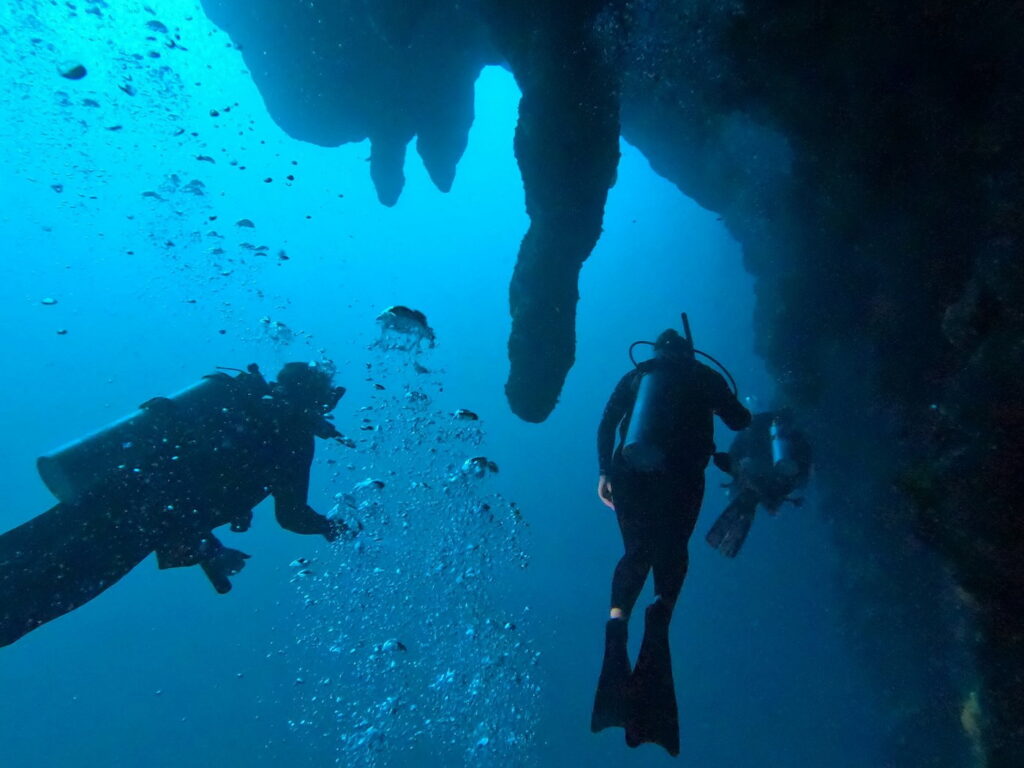
The Blue Hole existed before the surrounding coral reef system formed. Descending into it felt less like exploring a reef and more like descending backward through Belize’s geological history.
As an inland Belize tour guide familiar with caves like ATM and Barton Creek, I kept thinking about limestone, cave systems, sinkholes, and how ancient these formations really are.
I even caught myself wondering what some of Belize’s cave systems may have looked like before rising seas transformed the landscape.
For me, diving the Blue Hole wasn’t just about fish or visibility.
It became a thought process about Belize through time.
That morning, we left Itza Resort around 7 AM — only about twenty minutes from the dive site itself.
And I remember being grateful for the quiet ride.
Not exhausted from hours offshore.
Just enough time to think about where I was about to descend.
— Alvin J. Brown
Reservations Manager at Itza Resort, Open Water Diver & Belize Inland Tour Guide
Mainland and populated island diving is still an excellent option for many travelers.
Especially:
If your trip is about:
…mainland Belize diving may honestly fit better.
And there’s nothing wrong with that.
An atoll-based stay may fit travelers who:
It is usually less about luxury and more about location. The reef becomes the setting for the stay rather than a single scheduled excursion.
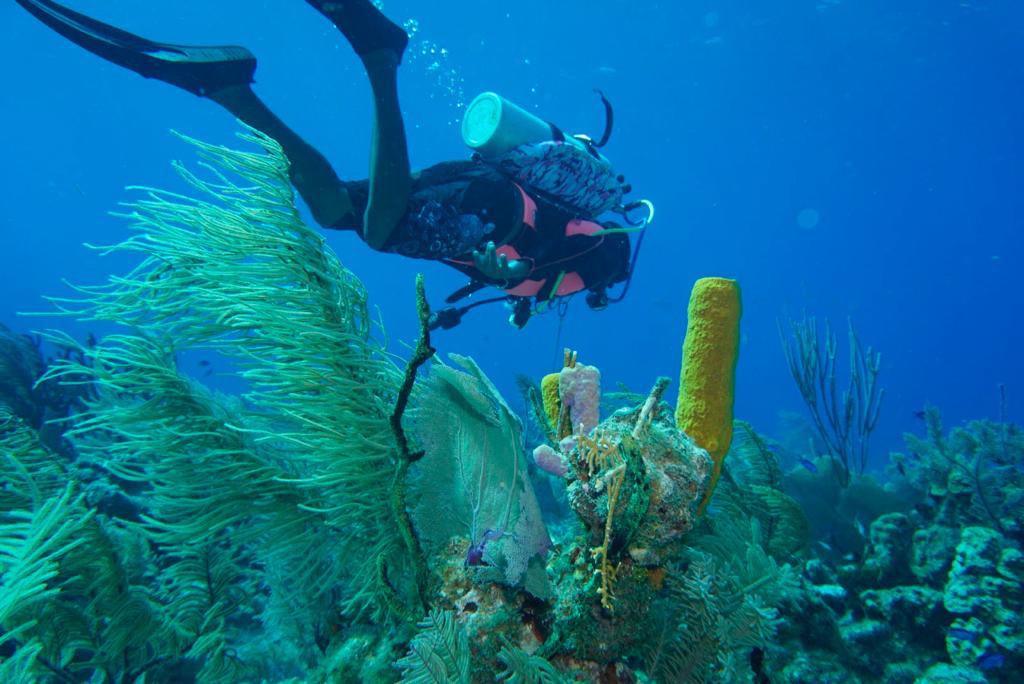
Lighthouse Reef Atoll feels different because the reef becomes part of daily life instead of something guests travel toward from the mainland each morning.
At Itza Resort on Long Caye, guests wake inside the atoll. That removes the need to repeat the mainland crossing on every dive day. The actual dive plan, boat times and surface intervals still depend on weather, sea conditions and operations.
The advantage is not conventional luxury. It is location:
For travelers who value reef time over nightlife and resort amenities, that difference can shape the entire trip.
Most people researching Belize diving focus on dive sites.
Experienced Belize divers eventually focus on something else just as important:
👉 How close they actually stay to the reef itself.
Because the difference between commuting to Lighthouse Reef…
…and waking up on it…
…can completely change how the trip feels.
In Belize, the reef is the destination.
But for some divers, staying beside it becomes the experience.

✔ Certified divers
✔ Couples and small groups
✔ Reef-focused travelers
✔ Guests who enjoy quiet, remote places
May not be ideal for
✖ Luxury seekers
✖ Non-divers
✖ Nightlife travelers
Non-divers are welcome, especially if they enjoy snorkeling, quiet island time, and nature — but Itza Resort is built around reef access and diving.
Before choosing an atoll stay
The same distance that creates the reward also requires realistic expectations and careful planning.
Why choose Itza for an atoll-based trip?
Specific dive sites, schedules and boat times remain subject to weather, sea conditions and resort operations.

Continue planning your Lighthouse Reef trip
→ Compare Dive Packages
→ Compare Blue Hole Access from Ambergris Caye
→ Understand the Full Cost of a Belize Dive Trip
→ See What Staying on Lighthouse Reef Is Like
Ready to check whether an atoll stay fits your dates and diving plans?