
Most people recognize the Great Blue Hole from aerial photographs.
A nearly perfect dark-blue circle surrounded by the turquoise waters of Lighthouse Reef Atoll, Belize.
But what exactly is it?
Is it a cave?
A sinkhole?
A reef?
And what do divers actually see when they descend into its depths?
The Great Blue Hole is one of the most famous marine sinkholes in the world, attracting divers, scientists, photographers, and curious travelers from around the globe. Yet many people misunderstand what it really is and why it became so famous.
In this guide, you’ll learn what the Great Blue Hole is, how it formed, what’s inside it, and why it remains one of Belize’s most iconic natural attractions.
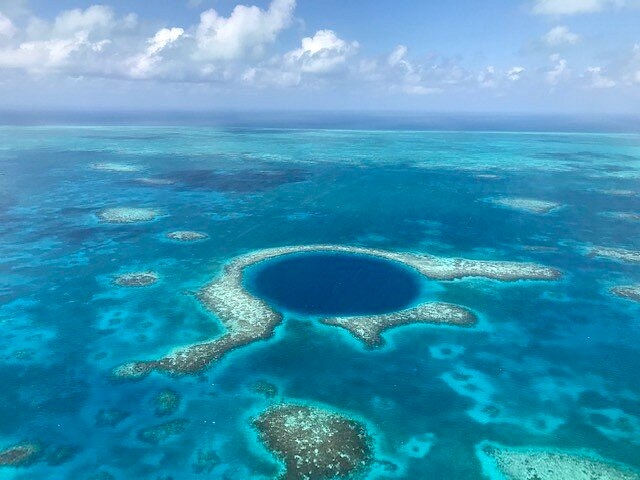
The Great Blue Hole is a giant marine sinkhole located within Lighthouse Reef Atoll, approximately 43 miles (70 km) offshore from Belize City and about 55 miles (89 km) from Ambergris Caye.
At first glance, it looks like a perfectly circular dark-blue hole surrounded by shallow turquoise reef.
At a glance:
Approximately 1,000 feet (305 meters) across
More than 400 feet (124 meters) deep
Nearly perfectly circular
Part of the Belize Barrier Reef Reserve System UNESCO World Heritage Site
But the most important thing to understand is this:
The Great Blue Hole did not begin underwater.
Thousands of years ago, during the last Ice Age, sea levels were much lower than they are today. The area that is now the Blue Hole was once a massive limestone cave system above sea level.
As the cave grew larger, portions of the roof collapsed. Later, rising sea levels flooded the cave, creating the giant marine sinkhole we see today.
In other words, the Great Blue Hole is not a reef, and it is not a volcanic crater.
It is the flooded remains of an ancient cave system.
Thousands of years ago, during the Ice Age:
Inside that cave, water shaped formations — the same kind you see in inland caves across Belize.
Then:
👉 The ocean rose
👉 The cave flooded
👉 The ceiling collapsed
What remains today is the Blue Hole.
And if you dive it, you’ll still see:
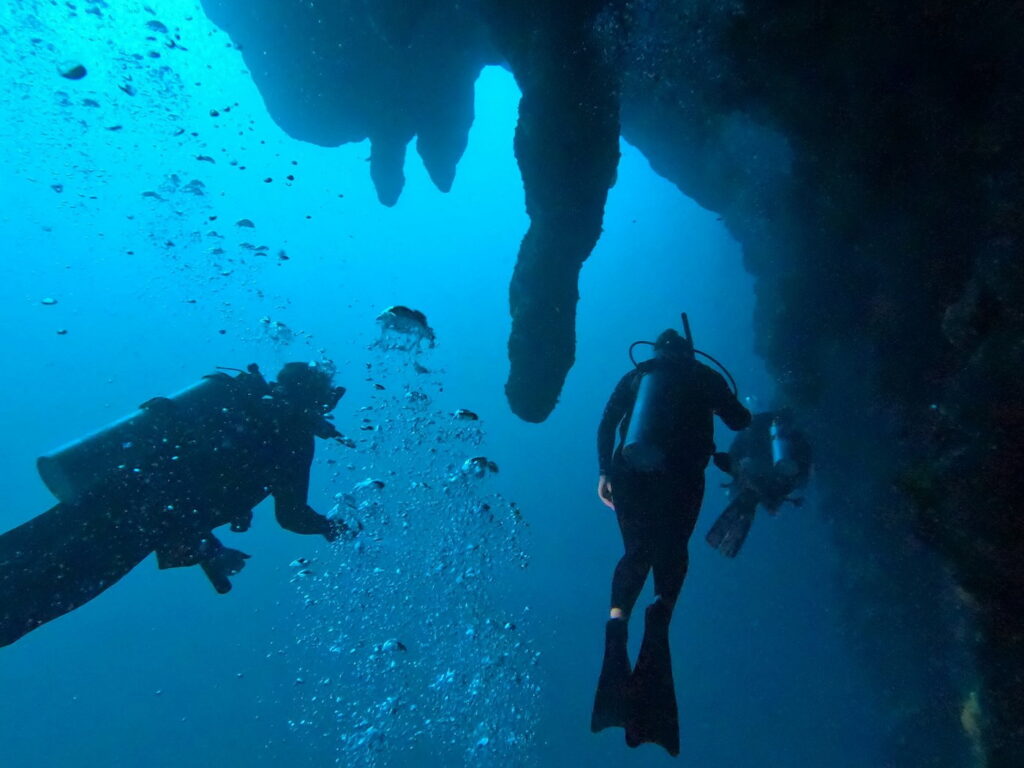
👉 Massive stalactites — frozen from when this was dry land
One of the most common questions travelers ask is:
“What is actually inside the Great Blue Hole?”
The answer depends on how deep you go.
Near the surface, divers encounter clear blue water and the dramatic circular walls that define the sinkhole.
At greater depths, the Blue Hole reveals the feature that made it famous among scientists and divers: giant underwater stalactites.
These limestone formations formed when the cave was still dry land thousands of years ago. Today, some of these stalactites measure more than 30 feet (9 meters) long and hang like stone icicles inside the flooded cavern.
Divers may also encounter:
Because the sinkhole is very deep and receives limited sunlight at lower depths, coral growth inside the Blue Hole itself is relatively limited compared to the surrounding reefs.
This is one reason many divers are surprised to discover that the reefs around the Blue Hole often contain more marine life and colorful coral than the sinkhole itself.
Learn more about the marine life found around Lighthouse Reef Atoll.
The Caribbean has other blue holes — especially in the Bahamas — and some are even deeper than Belize’s Great Blue Hole.
So why did Belize become the one most people recognize?
Part of it was timing.
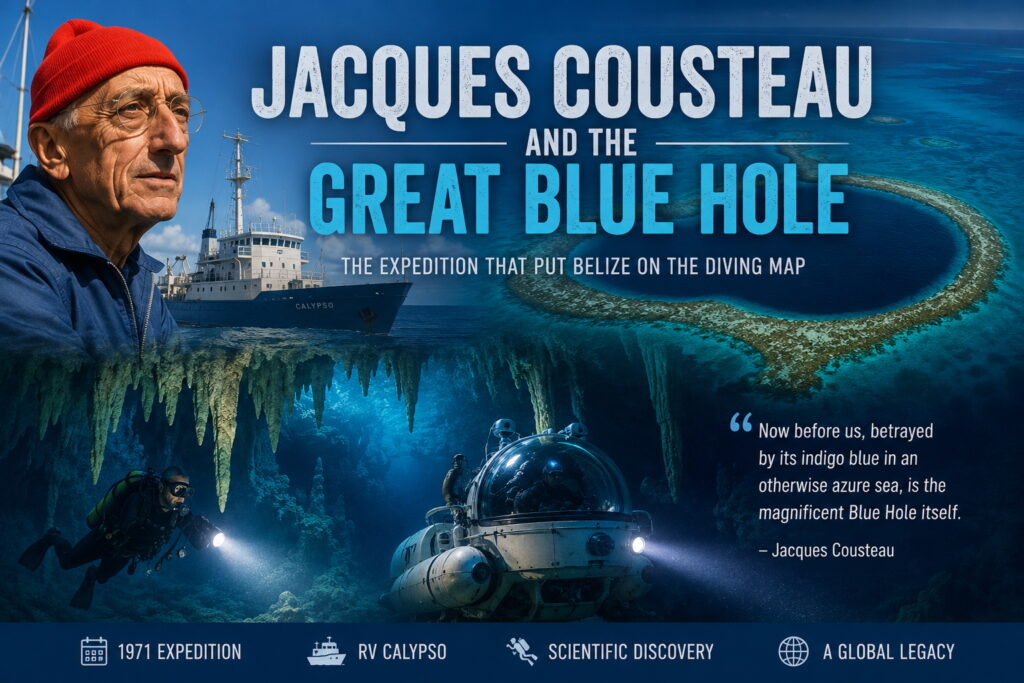
Part of it was Jacques Cousteau helping introduce the Blue Hole to the world.
But the bigger reason is where Belize’s Blue Hole is located.
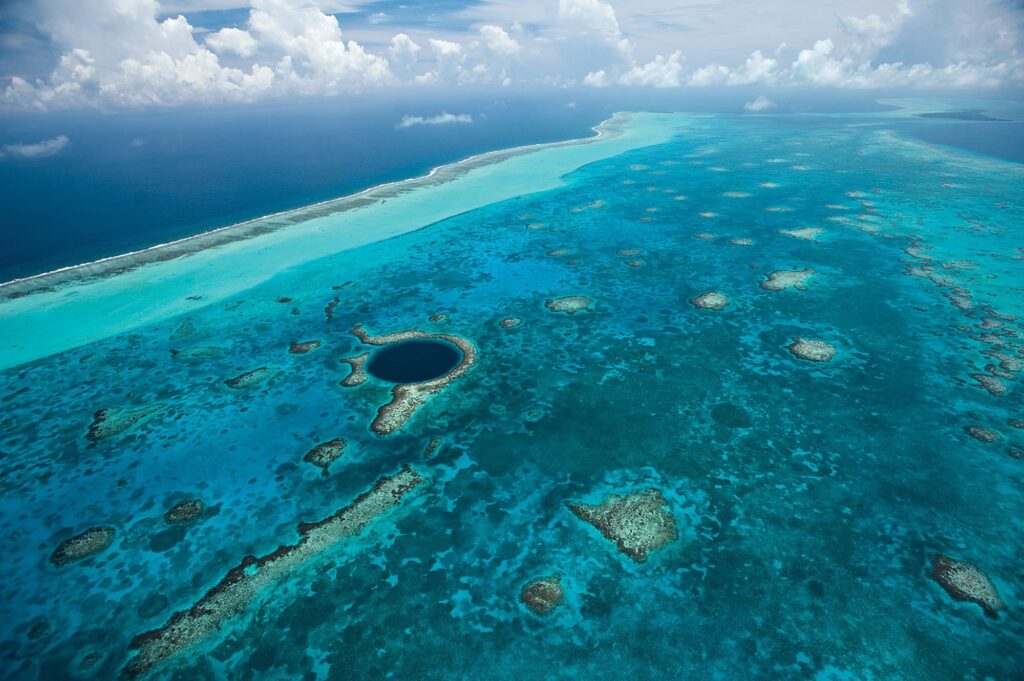
Unlike many blue holes that exist in isolation, the Great Blue Hole sits inside Lighthouse Reef Atoll — surrounded by coral walls, reef systems, marine life, and some of the best diving in Belize.
That changes the experience completely.
For many divers, the Blue Hole is not the entire trip.
It is part of a much larger offshore reef adventure that includes:
That combination helped Belize become one of the world’s most iconic diving destinations.
One of the most common misconceptions is that divers reach a dramatic hidden chamber at the bottom of the Great Blue Hole.
In reality, most recreational dives only descend to around 130–140 feet (40–43 meters), where the famous stalactites are located.
The bottom of the Great Blue Hole lies more than 400 feet (124 meters) below the surface.
Scientific expeditions that explored deeper sections found:
Because oxygen levels are extremely low in the deepest sections, very little marine life lives near the bottom.
The deeper parts are more like a geological archive than a thriving underwater ecosystem.
Many visitors expect the deepest part of the Great Blue Hole to be filled with fish, coral, and sharks.
The reality is different.
Most marine life is found near:
As divers descend deeper, sunlight disappears and oxygen levels drop.
This creates an environment where very little marine life can survive.
The healthiest coral reefs and greatest fish diversity are actually found around Lighthouse Reef Atoll rather than inside the deepest parts of the Blue Hole itself.
Modern scientific expeditions have revealed that the Great Blue Hole is more than a famous dive site — it is also a natural archive of Caribbean history.
Researchers found:
One of the most remarkable discoveries came from sediment cores collected from the bottom of the Blue Hole. Because the deepest sections are low in oxygen and largely undisturbed, layers of sediment accumulated over thousands of years like pages in a history book.
Scientists have used these layers to identify evidence of powerful hurricanes dating back nearly 6,000 years. This research has helped reveal long-term patterns of storm activity in the Caribbean and provided insights into how climate conditions have changed over time.
These discoveries confirmed that the Great Blue Hole is not only a flooded cave system but also one of the Caribbean’s most valuable geological and climate archives.
From real traveler and diver experiences:
People expect:
👉 A reef dive full of life, color, and movement
But what they actually find is:
👉 A deep, dark, geological space
Many describe it simply as:
👉 “A hole… but an incredible one”
You descend.
The reef disappears behind you.
Blue turns darker.
Then deeper.
Then quieter.
And suddenly:
👉 You’re surrounded by massive stalactites — hanging in open water
This is the moment most people realize:
👉 This isn’t a reef dive… this is something else
Some love it.
Some don’t.
But almost everyone remembers it.
This is where opinions split.
Some say:
👉 “Incredible… like diving through history”
Others say:
👉 “Overhyped… I wouldn’t do it again”
And both are right.
Because it depends on what you expect.
You’ll likely love it if:
You may be disappointed if:
– Is the Great Blue Hole Worth It
– things to do at the Great Blue Hole
This comes up again and again:
The Blue Hole is not the highlight of the day
The dives around it are.
Places like:
That’s what people talk about after the trip
That’s what stays with them
It’s not just a dive site.
It’s:
👉 A flooded cave
👉 A geological time capsule
👉 A moment — not a full experience
And once you understand that…
Everything about it makes more sense.
Most people visit the Blue Hole as a long day trip:
That works.
But it’s not the only way.
👉 You can stay on the atoll itself
When you’re already out there:
👉 That’s when the Blue Hole starts to make sense as part of something bigger
Yes — and this confuses a lot of travelers.
Belize actually has:
But despite sharing the same name, they are completely different experiences.
The Great Blue Hole
Located offshore at Lighthouse Reef Atoll.
Known for:
This is the world-famous circular Blue Hole most people see in photos.
The Inland Blue Hole
Located inside Blue Hole National Park near the Hummingbird Highway.
Known for:
It’s a natural inland pool fed by underground cave systems — not a dive site like the offshore Blue Hole.
Why People Mix Them Up
Many travelers search simply for:
👉 “Blue Hole Belize”
And Google often shows both.
So people sometimes:
The Interesting Part
Even though they’re different places…
Both are connected by the same thing:
👉 Belize’s limestone geology and ancient cave systems.
One flooded inland in the jungle.
The other flooded offshore in the Caribbean Sea.
And together, they tell a much bigger story about how Belize was formed — above and below the water.
The Great Blue Hole might be what brings you to Belize.
But it’s not the whole story.
It’s one piece of a much larger experience — one that only really makes sense when you see the reef around it.
And that comes down to something most people don’t think about early enough:
👉 Not just how you dive it
👉 But where you stay before you ever get in the water
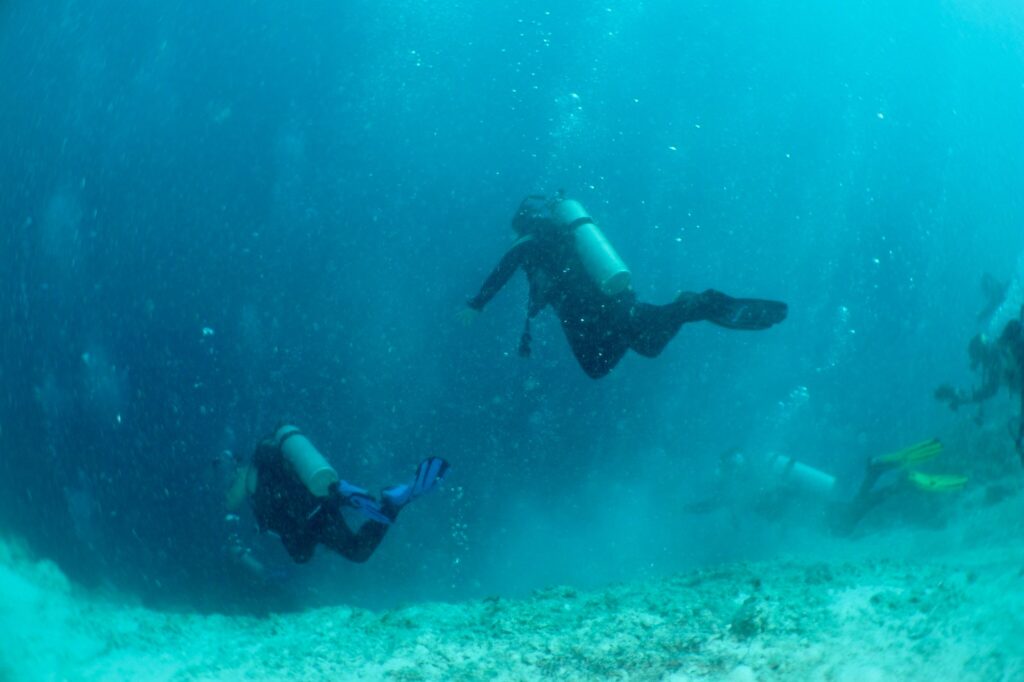
This is where Itza Resort fits in — and why it matters.
Located directly on Lighthouse Reef Atoll, not miles away from it, you’re already in the center of:
That means:
In many ways, the experience feels closer to a liveaboard dive trip:
👉 Wake up where the diving is
👉 Dive multiple sites without long transfers
👉 Stay connected to the reef day after day
But with something most liveaboards don’t offer:
👉 You return to land each day
👉 You have space, stability, and a consistent base
And behind that experience is something just as important:
👉 Years of operating on this atoll — in changing weather, currents, and seasons
That’s what turns a remote location into a reliable, repeatable dive experience.
The Great Blue Hole might be the reason you search.
But it’s not what defines the best diving in Belize.
That comes from:
And when all of that comes together — location, experience, and consistency —
👉 You’re not just visiting one of the world’s most famous dive sites
👉 You’re staying in the middle of one of its best dive systems
That’s what makes the difference.
And that’s why, over time, many divers come to see Itza Resort as one of the best dive resort experiences in Belize.
Yes. Divers may encounter Caribbean reef sharks, nurse sharks, blacktip sharks, and other pelagic species.
No. Recreational dives typically remain around 130–140 feet (40–43 meters), well above the deepest sections.

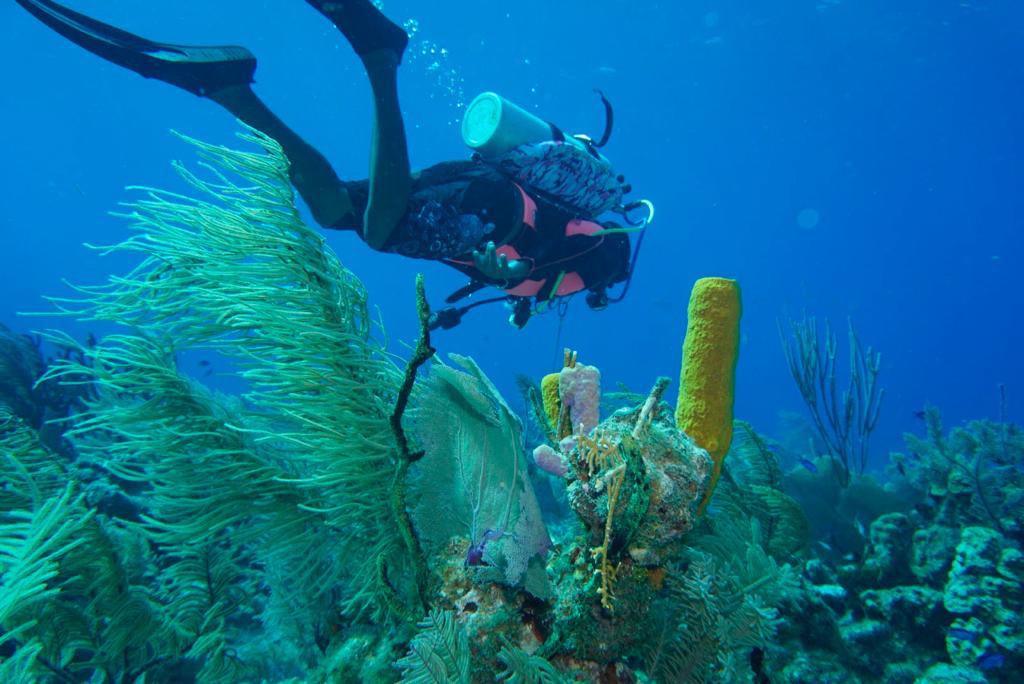
✔ Certified divers
✔ Couples and small groups
✔ Reef-focused travelers
✔ Guests who enjoy quiet, remote places
May not be ideal for
✖ Luxury seekers
✖ Non-divers
✖ Nightlife travelers
Non-divers are welcome, especially if they enjoy snorkeling, quiet island time, and nature — but Itza Resort is built around reef access and diving.
Why Divers Choose Itza

Plan Your Dive Trip
→ Dive Packages
→ Blue Hole vs Ambergris
→ Real Cost of a Dive Trip
→ What It’s Like Staying Here
Ready to Plan Your Stay?
Trips to Lighthouse Reef take a bit more planning — from boat transfers to dive days.
If you’re considering it, we can help you put it together properly.