Marine Life at Lighthouse Reef: Why This Reef System Feels Different

Beyond the Blue Hole — reef health, marine behavior, and the underwater world most visitors never fully understand.

Most people arrive at Lighthouse Reef Atoll focused on one thing:

👉 The Great Blue Hole.

And while the Blue Hole is absolutely worth understanding and experiencing…

It’s usually not the part divers remember most.

Because the real story of Lighthouse Reef is bigger than a single dive site.

It’s an entire offshore reef system still functioning in ways many Caribbean reefs no longer do.

And once you spend time here — especially around Long Caye, Half Moon Caye, and the outer reef walls — you begin to notice something difficult to explain at first:

👉 The reef feels alive differently.

Not louder.

Not more extreme.

Just… healthier, calmer, and more connected.

That feeling isn’t imaginary.

There are real ecological reasons behind it.

This Is Not Just a Reef — It’s a Living Offshore System

Lighthouse Reef Atoll sits about 50 miles offshore from mainland Belize.

That distance changes almost everything underwater.

Unlike nearshore reefs closer to cities, rivers, runoff, and heavy development, Lighthouse Reef exists in clearer, more oceanic water with:

  • less sediment
  • less freshwater runoff
  • stronger water circulation
  • lower fishing pressure
  • fewer daily visitors

Over time, those differences matter.

They affect:

  • coral health
  • visibility
  • fish density
  • predator presence
  • reef structure
  • marine behavior

And divers notice it immediately — even if they can’t fully explain why.

This is one reason many experienced divers describe Lighthouse Reef as feeling more “alive” than heavily visited nearshore reef systems.

Why Offshore Reefs Often Stay Healthier

No reef in the Caribbean is untouched anymore.

Climate change, coral bleaching, warming oceans, and disease affect reefs everywhere — including Belize.

That part matters to say honestly.

But offshore atolls like Lighthouse Reef still maintain important advantages over many nearshore systems.

Researchers studying Belize’s reefs found offshore reef areas consistently showed:

  • higher coral cover
  • healthier herbivorous fish populations
  • lower macroalgae dominance
  • clearer water conditions

Remoteness helps.

Not because it makes the reef invincible…

But because it reduces constant human pressure.

At Lighthouse Reef:

  • fewer boats anchor daily
  • there’s less coastal runoff
  • currents flush the reef more efficiently
  • the ecosystem remains more connected to open ocean conditions

That’s part of why the walls here often feel cleaner, clearer, and more structurally intact than heavily trafficked reefs closer to shore.

And divers notice it.

Especially those who have dived elsewhere in the Caribbean.

👉 Learn more about
Sustainable Diving in Belize

👉 Why staying directly on Lighthouse Reef changes the experience
Staying on Lighthouse Reef Atoll

Beyond the Blue Hole: The Diving Most People Remember

The Blue Hole may bring people here.

But the reef surrounding it is usually what stays with them afterward.

Because once you move beyond the Hole itself, Lighthouse Reef opens into a much larger underwater landscape.

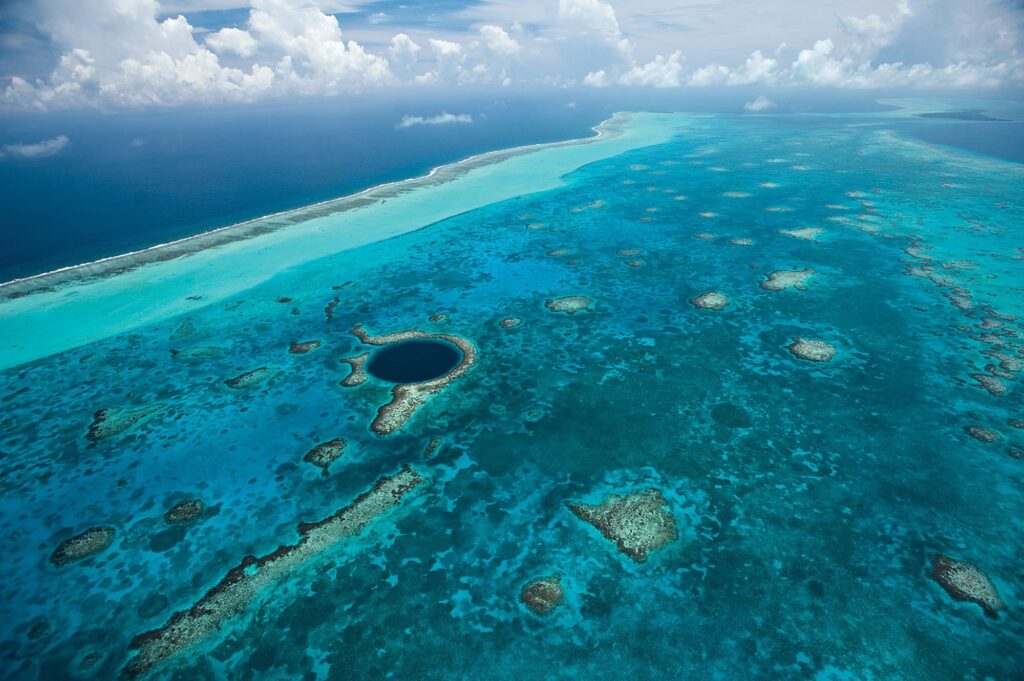
Aerial view of the Great Blue Hole at Lighthouse Reef Atoll in Belize showing deep blue sinkhole surrounded by coral reef and turquoise water
The Great Blue Hole at Lighthouse Reef Atoll — one of Belize’s most iconic and photographed dive sites, visible from both the air and underwater.

Half Moon Caye Wall

This is the dive many experienced divers quietly call the real highlight.

Not because it’s extreme.

Because it feels complete.

You descend beside:

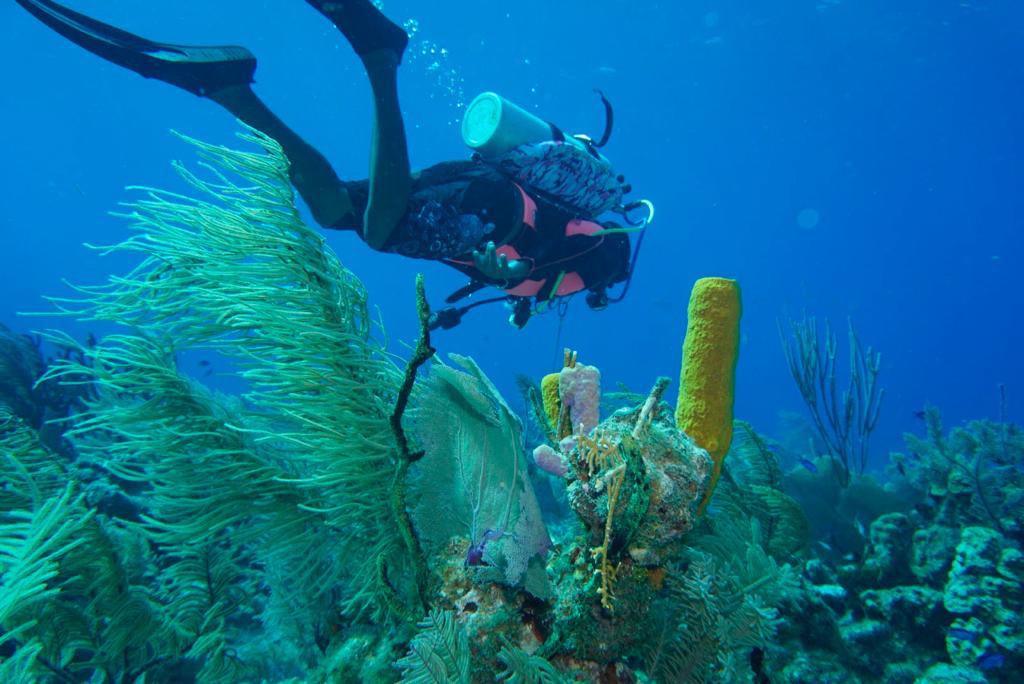
  • massive sponge formations
  • sea fans moving with current
  • reef fish stacked along the wall
  • eagle rays gliding below
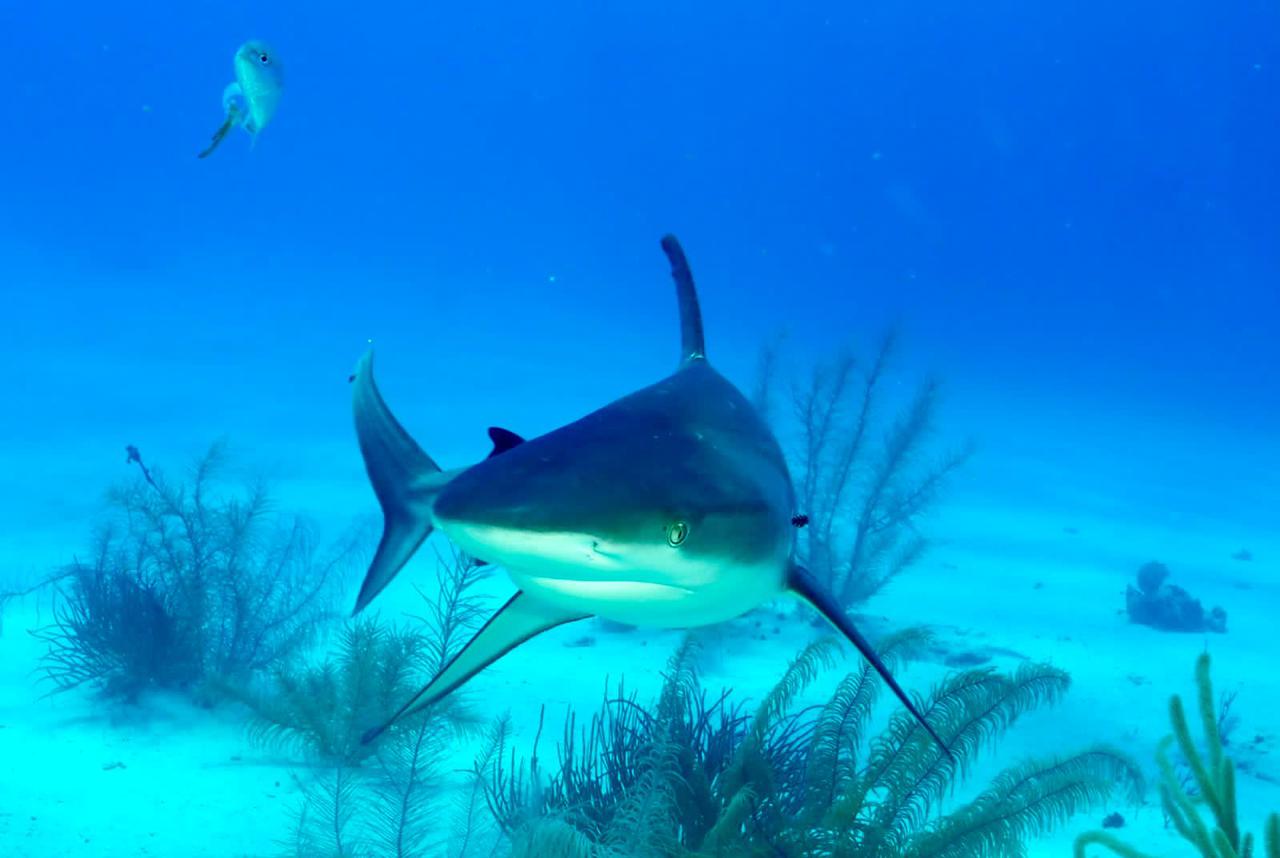
  • Caribbean reef sharks cruising the outer edge

The wall drops sharply into deep blue water, but conditions are often calmer and clearer than people expect.

Compared to stronger current-driven sites elsewhere in Belize:

  • dives here can feel slower
  • visibility longer
  • marine behavior easier to observe

This makes Half Moon Caye especially powerful for:

  • underwater photography
  • marine observation
  • relaxed wall diving
  • long drift dives

It’s less about adrenaline.

More about immersion.

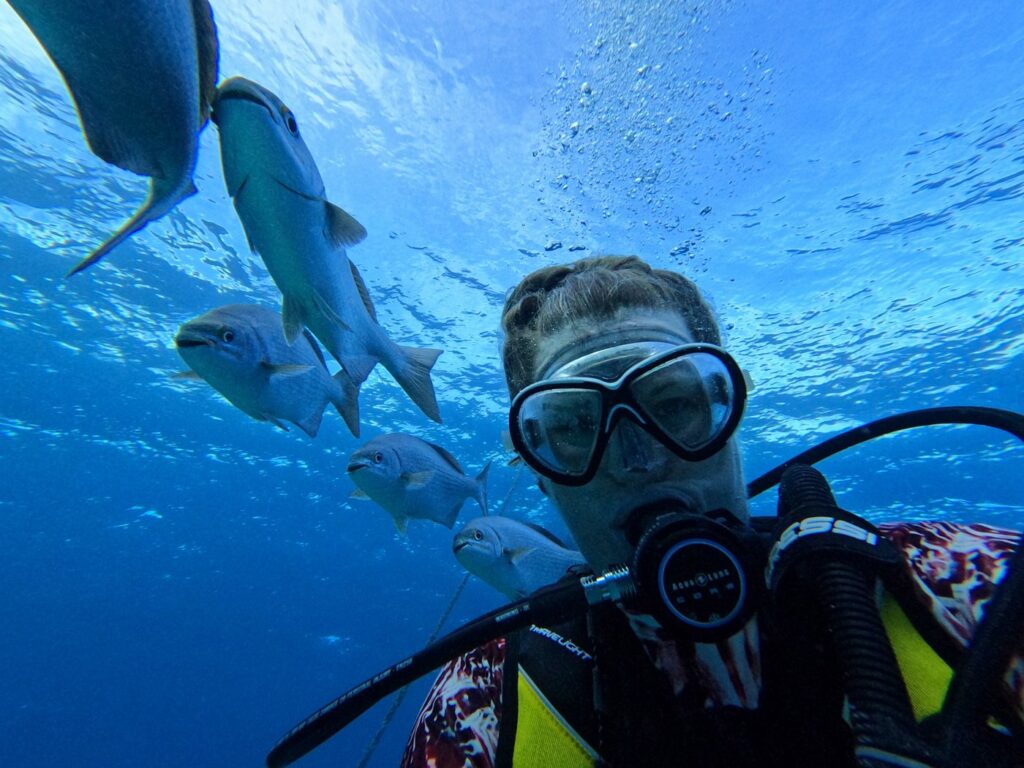
Scuba diver surrounded by schooling fish at Lighthouse Reef Atoll Belize
Close encounters with marine life are common at Lighthouse Reef, where healthy reef systems support constant movement and interaction.

The Aquarium: One of the Most Underrated Dive Sites in Belize

Most people hear about the Blue Hole.

Very few hear enough about the Aquarium.

And honestly, that’s one of the biggest gaps in Belize diving content online.

Located near Long Caye, the Aquarium combines:

  • coral ridges
  • sand channels
  • schooling reef fish
  • wall edges
  • open blue water interaction

On certain days, the site explodes with movement.

Divers commonly report:

  • schooling snapper
  • Creole wrasse
  • angelfish
  • barracuda
  • eagle rays
  • hunting jacks
  • silverside bait balls during seasonal periods

This is also where many people first notice the difference between:
👉 “seeing fish”
and
👉 “watching a reef system functioning.”

Predators move through bait schools.

Currents organize movement.

Fish density changes with tide and light.

The reef feels active — not staged.

👉 Most visitors never realize how important sites like the Aquarium become once you spend multiple days on the atoll.
Diving at Itza Resort

Why Marine Life Feels Different Here

One of the biggest misconceptions about marine life at Lighthouse Reef is that the sightings are random.

They’re not.

This reef system supports:

  • resident predator populations
  • spawning behavior
  • migration corridors
  • reef cleaning stations
  • feeding zones
  • turtle nesting areas
  • nursery habitats

Everything connects.

Caribbean Reef Sharks

One of the most important discoveries from recent research around Lighthouse Reef is that many Caribbean reef sharks here are long-term residents of the atoll system.

These sharks are not simply “passing through.”

The reef is part of their actual home range.

That changes how divers experience them.

Encounters tend to feel:

  • calm
  • natural
  • observational

not like baited tourism interactions.

In recent years, marine protection zones around Belize’s offshore atolls have also helped shark populations recover.

And divers increasingly notice that.

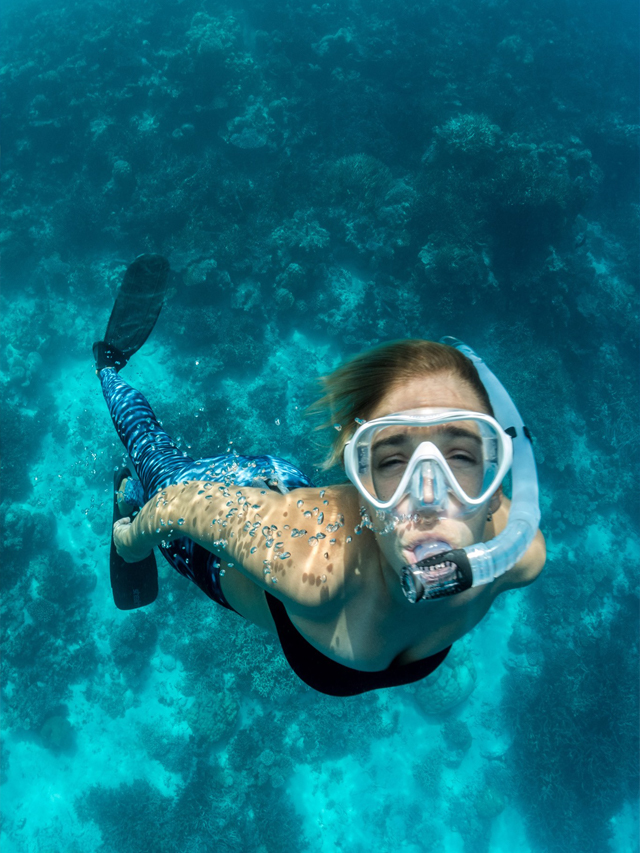
Woman snorkeling above coral reef at Lighthouse Reef Atoll Belize near Long Caye
Snorkeling above the clear offshore waters of Lighthouse Reef Atoll Belize, where visibility, reef structure, and marine life make even shallow experiences feel immersive.

Snorkeling: The First Layer of the Reef

You do not need to scuba dive to understand Lighthouse Reef.

Snorkeling already reveals how layered the ecosystem is.

In shallow areas around Long Caye and Half Moon Caye, you may see:

  • parrotfish feeding on coral algae
  • schools of yellowtail snapper
  • blue chromis moving with current
  • juvenile reef fish hiding in coral structure
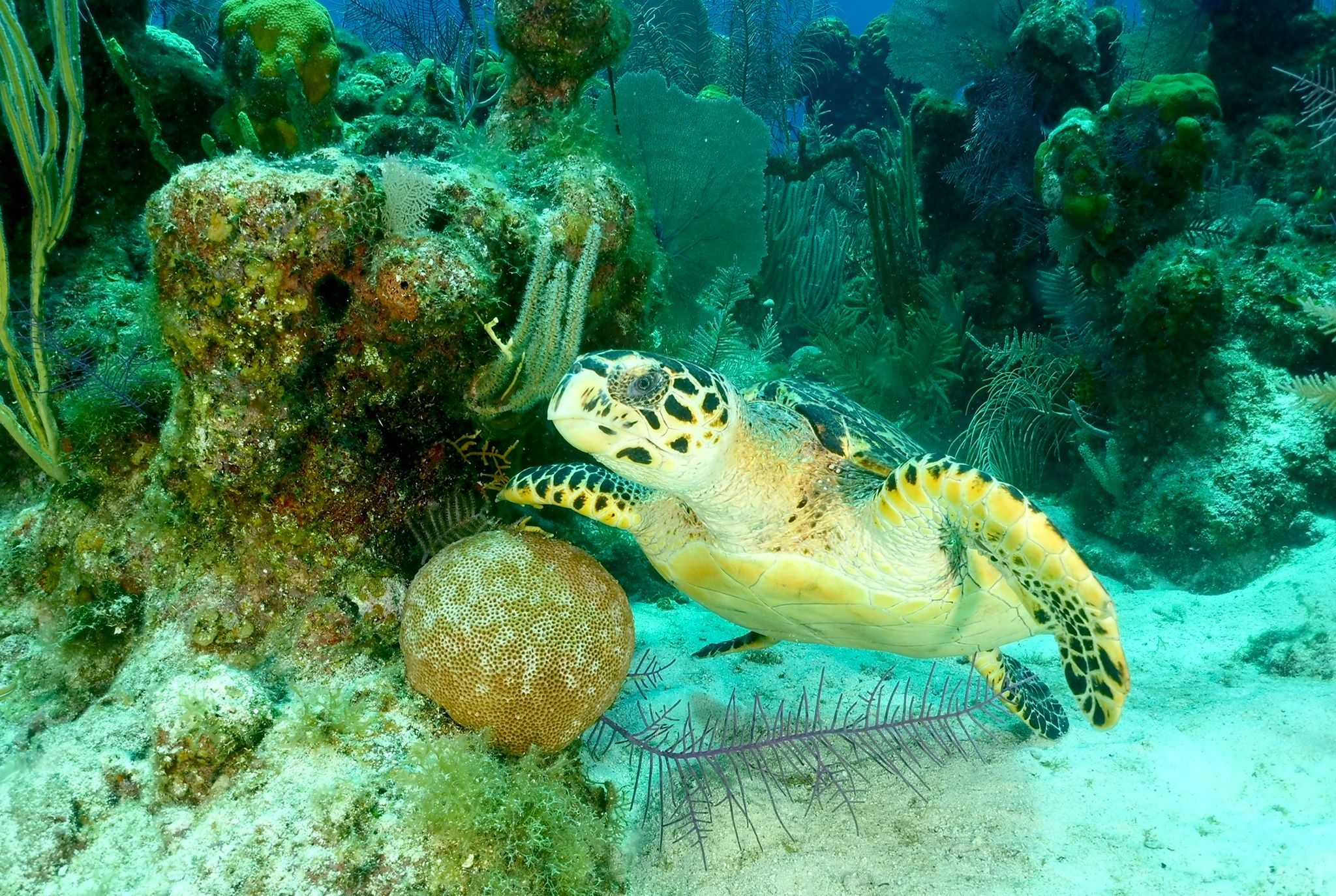
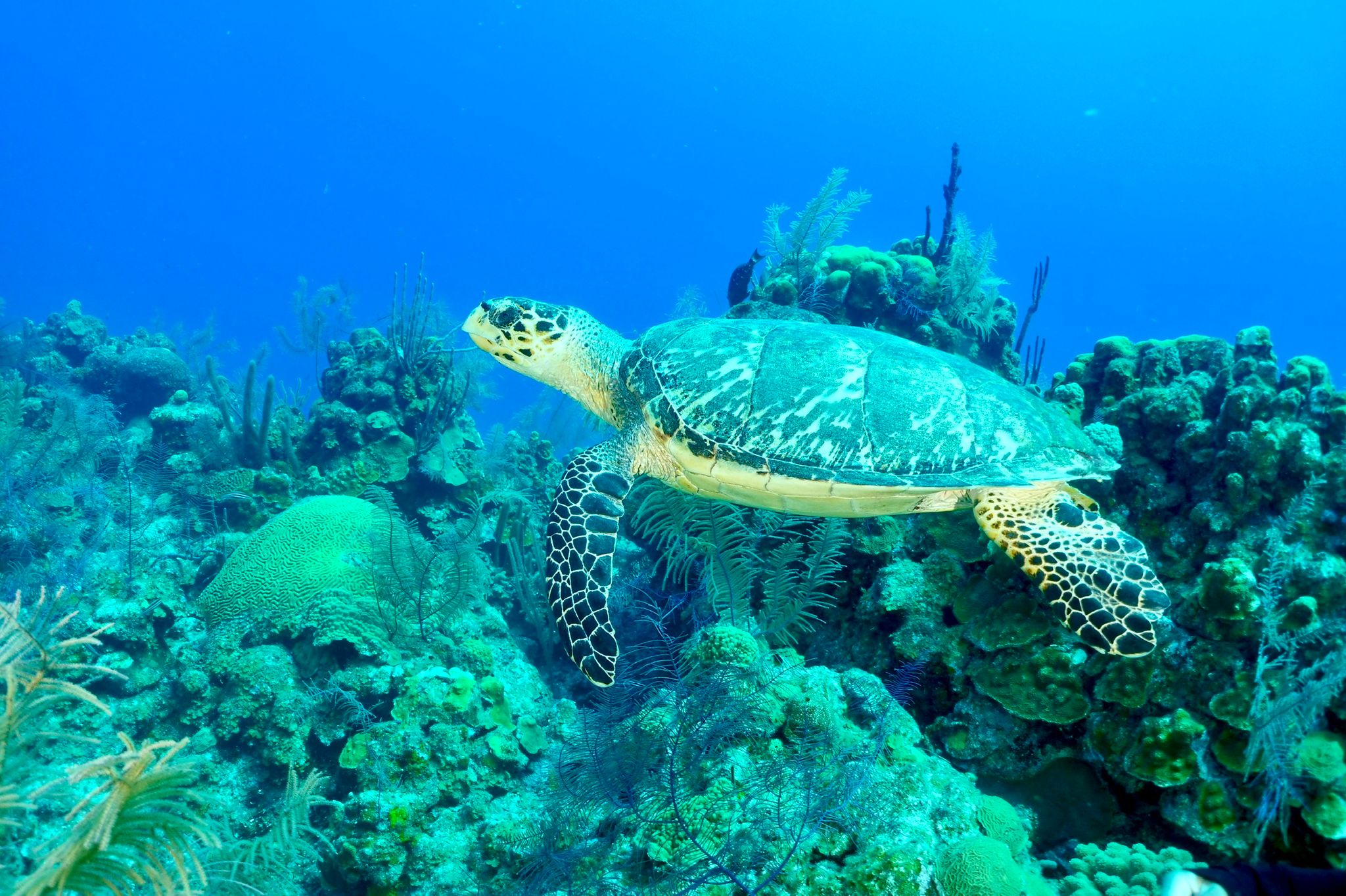
  • sea turtles crossing shallow reef edges

With visibility often exceeding 80–100 feet in calm conditions, the sense of depth and structure becomes part of the experience itself.

Many people realize quickly:

👉 this is not shallow snorkeling in the ordinary sense.

The reef extends beneath you in every direction.

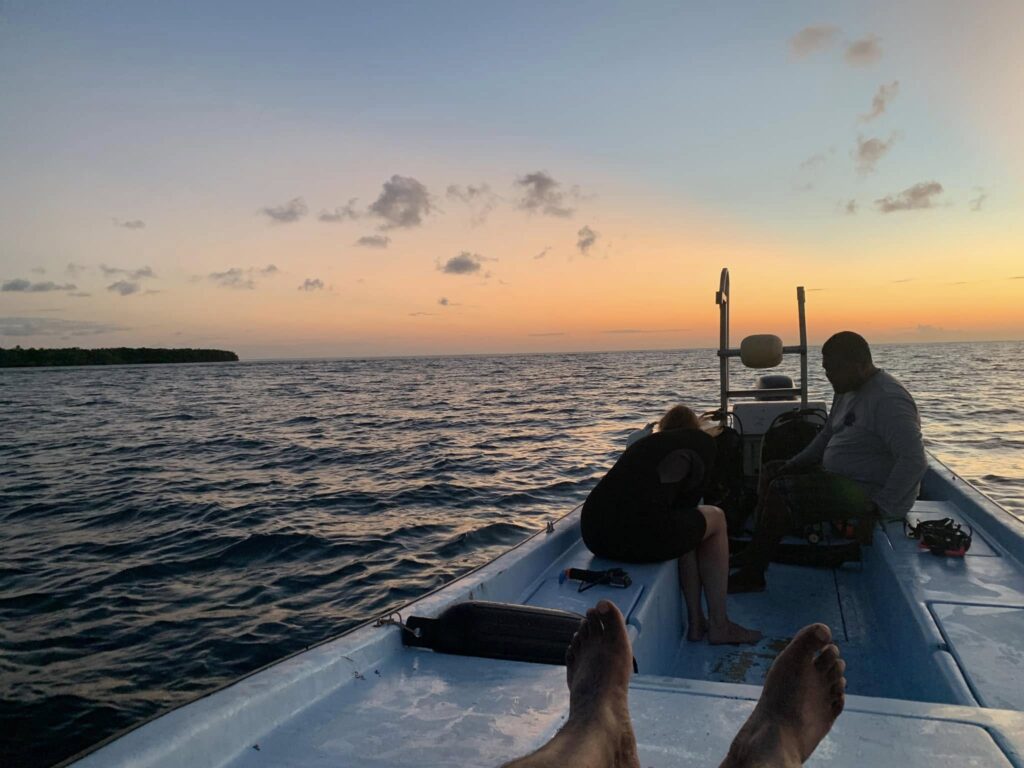
Boat returning across Lighthouse Reef Atoll at sunset in Belize after a day of diving
End of a dive day at Lighthouse Reef—where the experience isn’t just underwater, but in the quiet moments between sites.

Night Diving: When the Reef Changes Personality

At night, Lighthouse Reef becomes something else entirely.

The daytime movement slows.

But the reef becomes more active in hidden ways.

You begin noticing:

  • moray eels hunting
  • lobster emerging
  • octopus moving across coral
  • sleeping parrotfish hidden in crevices
  • squid flashing through the dark
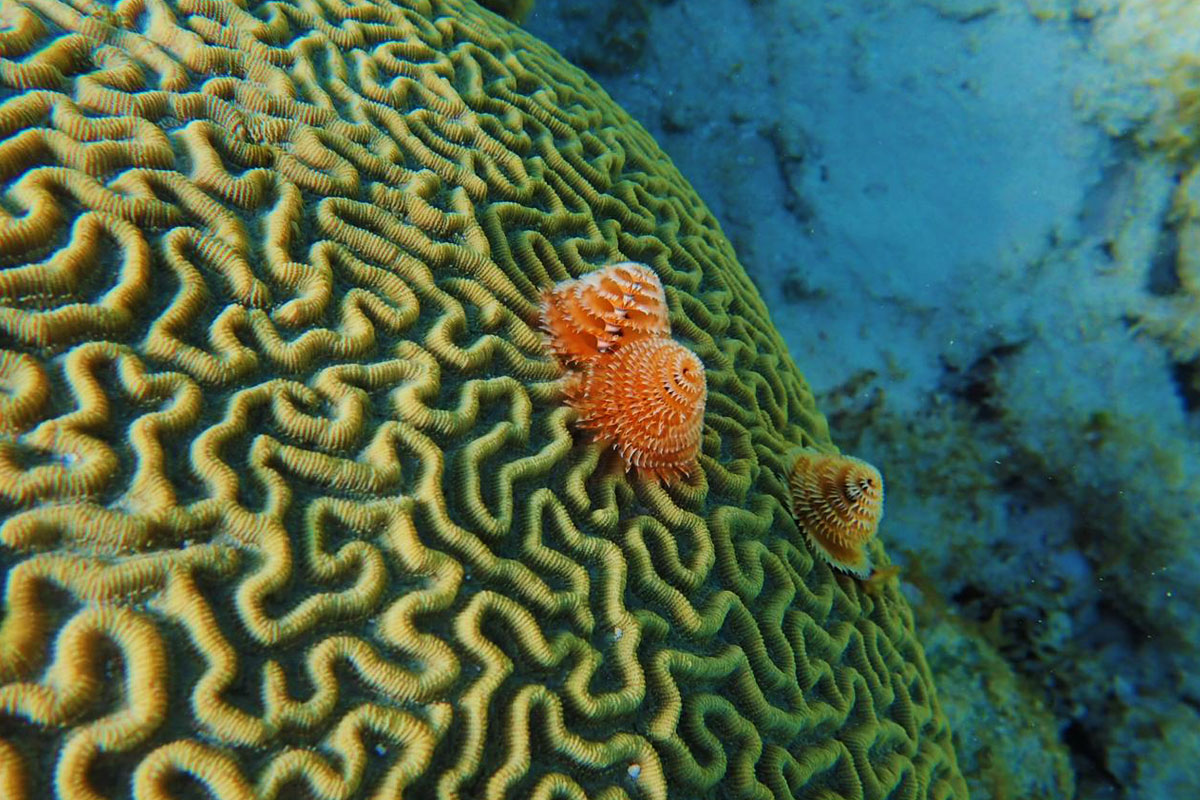
  • coral polyps opening to feed
  • flashes of bioluminescence in the water

The reef doesn’t become quieter.

It becomes more intimate.

For many divers, night diving here becomes one of the most memorable experiences of the trip.

Because it reveals the reef as a living system operating around the clock.

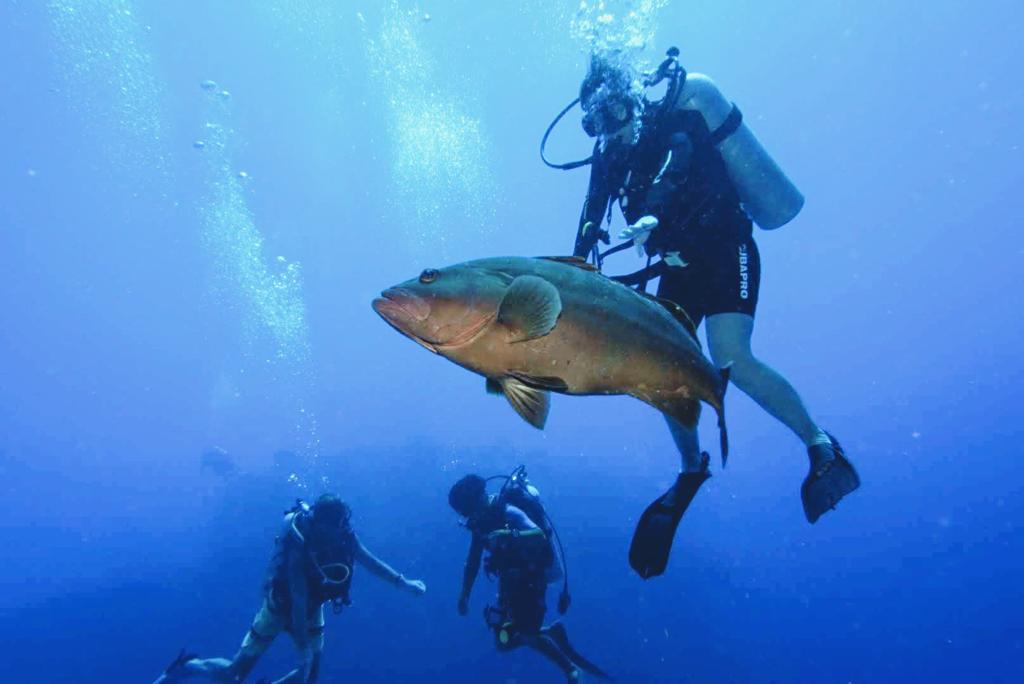
Large grouper swimming near scuba divers at Lighthouse Reef Atoll Belize during a seasonal marine behavior dive
A large grouper moving through open blue water near divers at Lighthouse Reef Atoll — part of the seasonal movement and marine behavior that makes Belize’s offshore reefs feel alive year-round.

Seasonal Marine Behavior: The Reef Is Always Changing

One thing most Belize diving websites rarely explain is that offshore reef systems change throughout the year.

And Lighthouse Reef behaves differently from nearshore reefs.

Dry Season (November–April)

Typically brings:

  • calmer seas
  • clearer visibility
  • cooler water temperatures
  • easier boat crossings

This is often considered the best overall visibility season.

Large schools of fish and stronger currents are also more common during parts of this period.

Spring & Early Summer

This period can bring:

  • spawning activity
  • larger fish aggregations
  • silverside bait balls
  • increased predator movement

During certain seasonal windows, divers may encounter:

  • eagle rays
  • larger reef shark activity
  • dense schooling fish behavior

Summer & Fall

Water temperatures rise and the reef changes again.

This season may include:

  • turtle nesting around Half Moon Caye
  • plankton increases
  • occasional manta ray sightings
  • warmer water and softer light underwater

Even during Belize’s rainy season, offshore atolls like Lighthouse Reef often maintain better visibility than nearshore reef systems because mainland runoff has far less influence this far offshore.

Planning to Go Diving in Belize

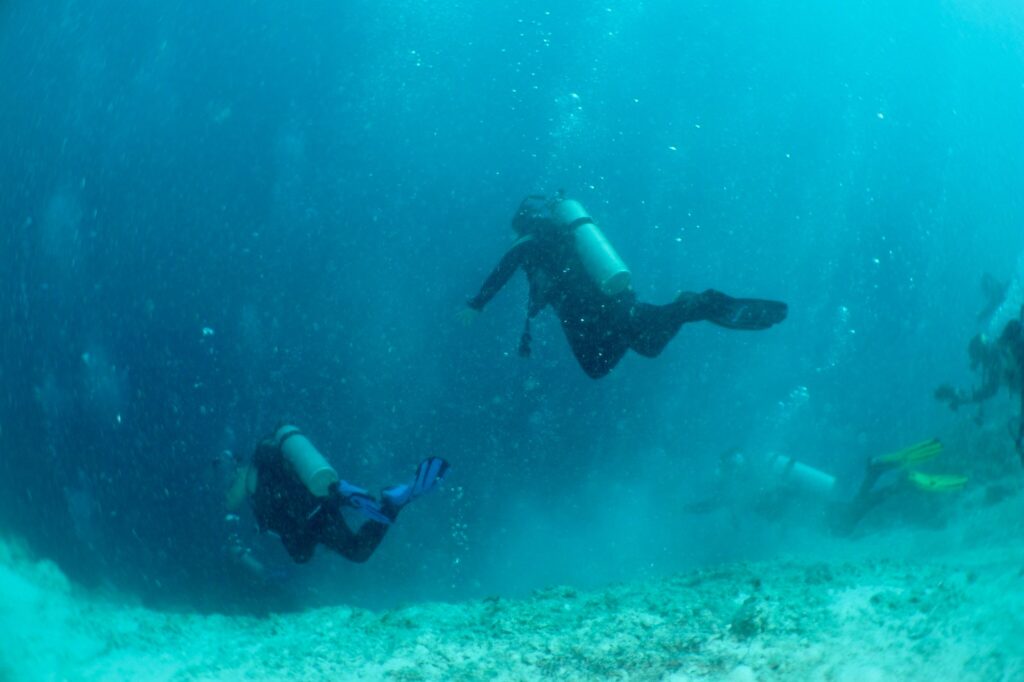
Scuba divers descending into the Great Blue Hole in Belize at Lighthouse Reef Atoll
Divers descending along the edge of the Great Blue Hole at Lighthouse Reef Atoll, Belize.

The Blue Hole (The Honest Truth)

The Great Blue Hole deserves its reputation.

But not always for the reasons people expect.

The Blue Hole is:

  • geological
  • atmospheric
  • ancient
  • visually surreal

It’s a flooded cave system formed during Ice Age periods when sea levels were far lower than today.

Inside:

  • stalactites still hang underwater
  • the walls descend into darkness
  • oxygen levels decrease with depth
  • marine life becomes limited

So while the Blue Hole is absolutely iconic…

It is not the center of biodiversity at Lighthouse Reef.

The surrounding reef system is.

That’s why so many divers eventually say:

👉 “The Blue Hole was fascinating.”

👉 “But the reef around it was the real experience.”

Blue Hole vs Ambergris Caye

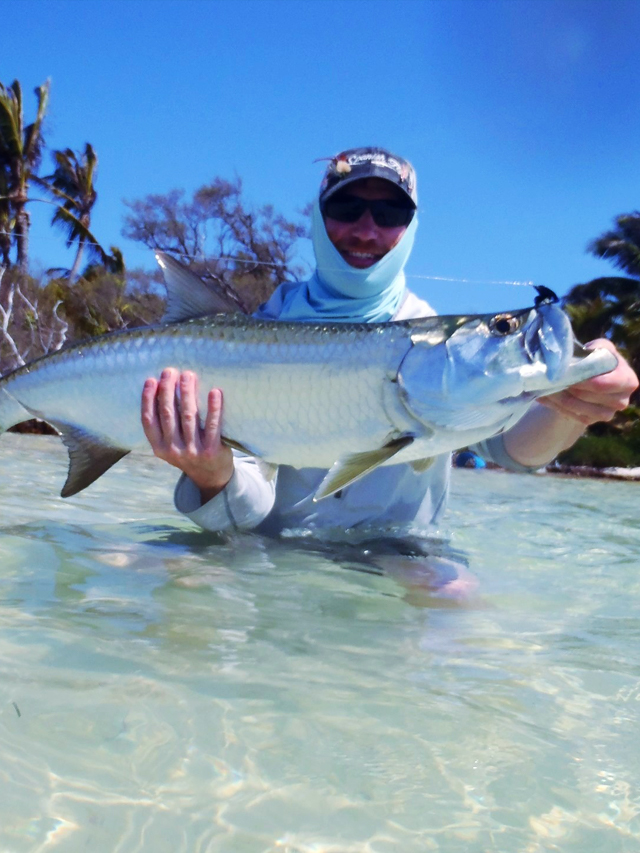
Guest holding a tarpon while fishing near Long Caye at Lighthouse Reef Atoll Belize with Itza Resort
A guest holding a tarpon in the shallow waters near Long Caye, Lighthouse Reef Atoll — where the reef system connects directly to Belize’s offshore fishing grounds.

Fishing: Another Layer of the Ecosystem

Fishing at Lighthouse Reef connects you to the outer edge of the system.

This is where:

  • reef
  • current
  • open ocean
  • pelagic movement

all intersect.

Depending on season and conditions, anglers may encounter:

  • snapper
  • grouper
  • barracuda
  • mahi-mahi
  • wahoo

But what stands out most is usually not the catch itself.

It’s understanding how connected the reef and open ocean really are.

Healthy reef systems support everything around them.

Why Staying on the Atoll Changes the Experience

Most visitors experience Lighthouse Reef like this:

  • long boat ride
  • one or two dives
  • back to the mainland

That experience barely scratches the surface.

When you stay on Long Caye, something changes.

You begin noticing:

  • morning reef conditions
  • afternoon light shifts
  • current changes
  • fish behavior
  • weather movement
  • nighttime reef activity
  • how different dive sites connect to each other

You stop treating the reef like a single attraction.

👉 And start understanding it as a system.

That’s the real difference.

Who This Experience Resonates With Most

This place tends to connect deeply with people who:

  • care about reef quality
  • enjoy observation over speed
  • value smaller dive groups
  • appreciate marine life behavior
  • prefer quieter, more remote environments
  • want more than a checklist dive trip

And Who It May Not Be For

It may not be the right fit if:

  • you only care about checking off the Blue Hole
  • you’re looking for nightlife and luxury resort culture
  • you don’t plan to spend meaningful time in or around the water
  • you prefer fast-paced tourism over slower immersion
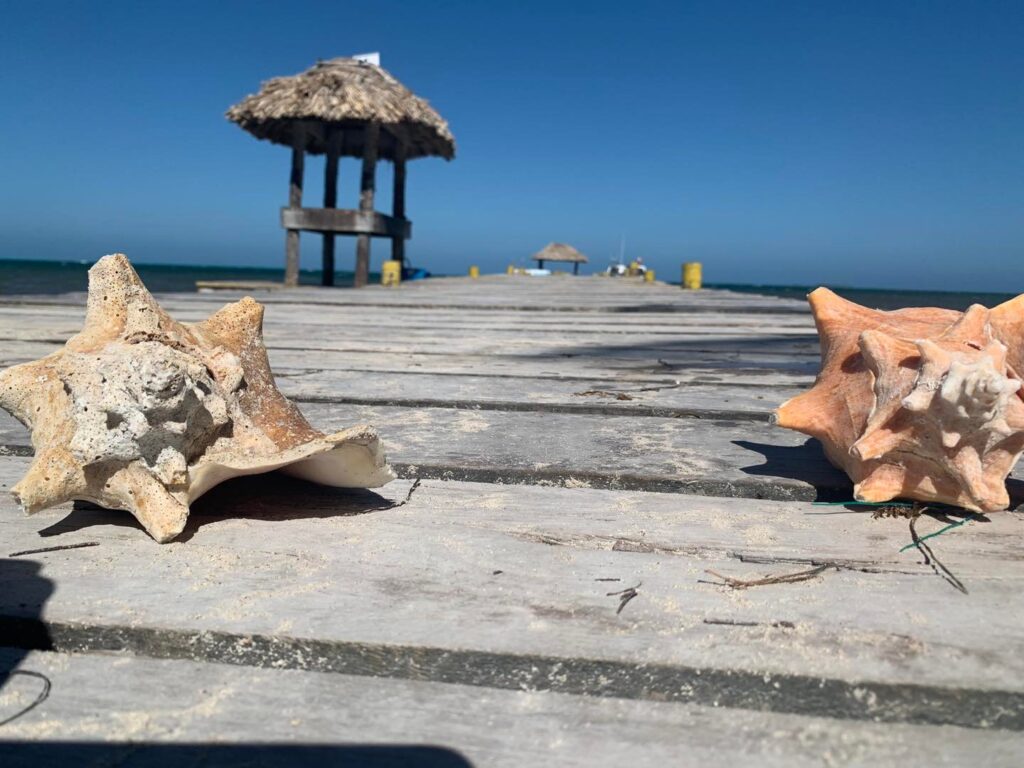
Conch shells resting on the dock at Long Caye, Lighthouse Reef Atoll Belize near Itza Resort
Conch shells resting along the dock at Long Caye, Lighthouse Reef Atoll — a quiet reminder that life at the reef extends beyond the dives themselves.

How Marine Park Fees Help Protect Lighthouse Reef

Every visitor to the Great Blue Hole and Half Moon Caye contributes directly to the protection of these remarkable marine environments.

Current marine park fees are:

  • US$30 per person for the Great Blue Hole
  • US$10 per person for Half Moon Caye Natural Monument

These fees are established by Belize authorities and help support:

  • Marine park rangers and enforcement
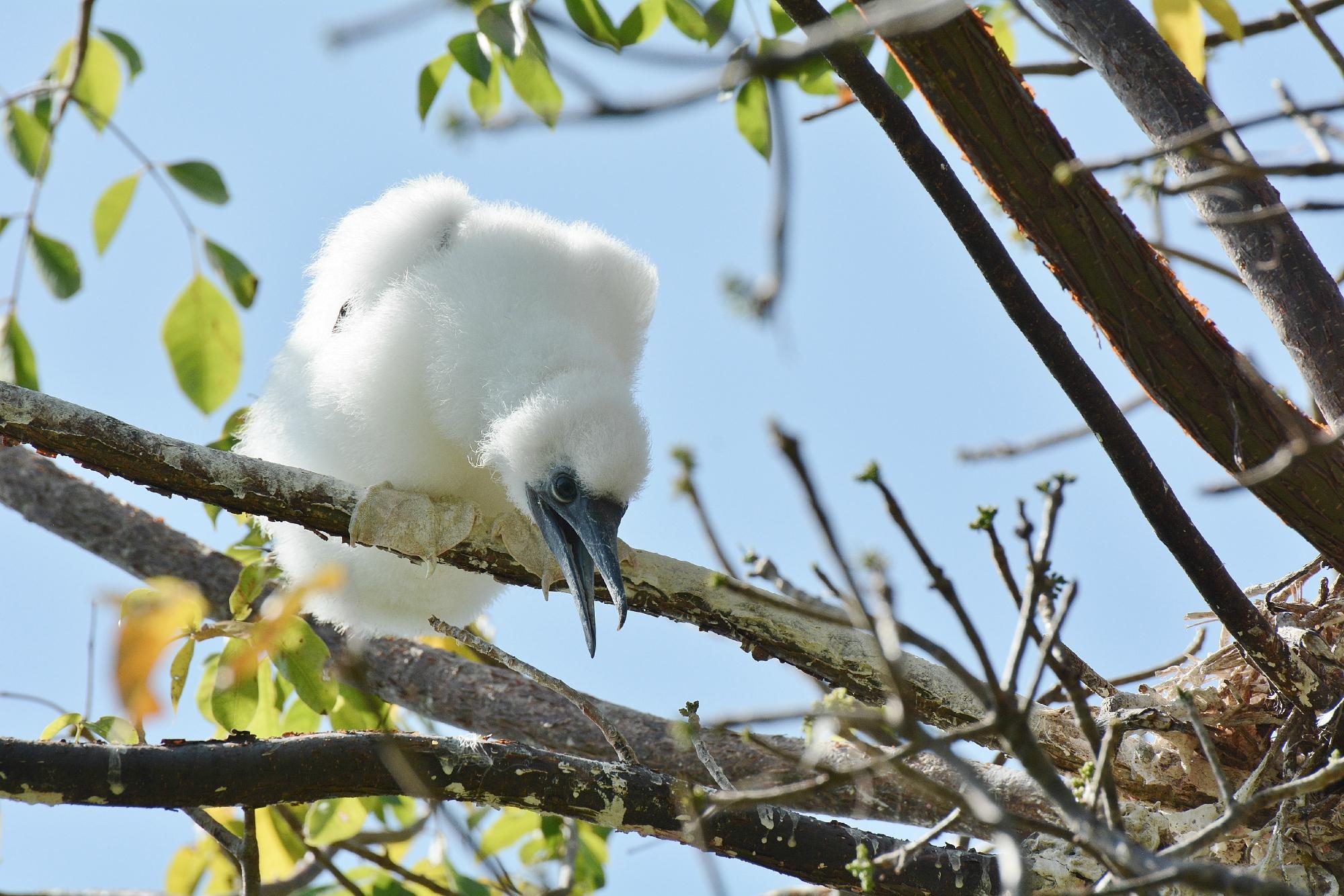
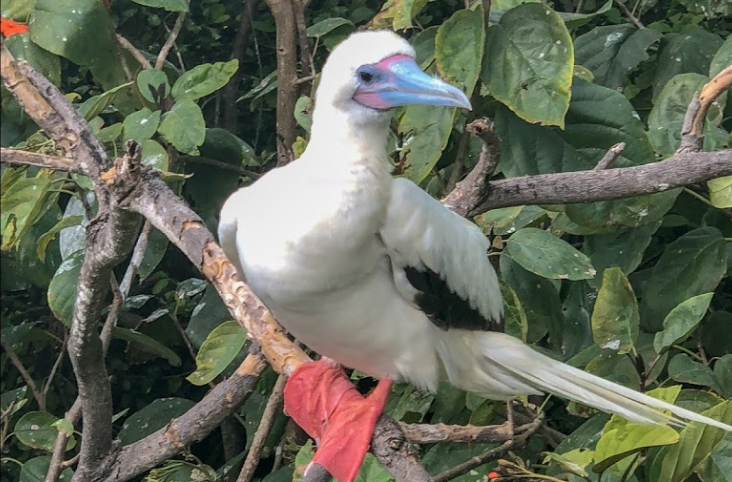
  • Protection of nesting Red-footed Boobies at Half Moon Caye
  • Reef monitoring and conservation programs
  • Visitor facilities and site maintenance
  • Long-term protection of the Belize Barrier Reef Reserve System

The healthy coral formations, reef sharks, sea turtles, eagle rays, groupers, and countless tropical fish found around Lighthouse Reef exist because Belize continues to invest in conservation.

When you pay these fees, you’re helping protect one of the most important marine ecosystems in the Caribbean and ensuring future generations can experience the same underwater world that divers enjoy today.

Final Thought

Most people come to Lighthouse Reef searching for one famous dive.

But the longer you spend here…

The more you realize the real story isn’t the Hole itself.

It’s the reef around it.

The currents.

The walls.

The marine life.

The silence between boats.

The feeling that this ecosystem — despite everything happening to reefs around the world — is still functioning in ways many others no longer fully do.

And through all of it, this place has quietly remained part of the reef itself.

First as Itza Lodge.

Now as Itza Resort.

Not built to separate people from Lighthouse Reef…

But to help them live beside it long enough to truly understand it.

Because the longer you stay here, the more something changes:

👉 You stop thinking about Lighthouse Reef as a dive destination.

👉 And start seeing it as a living offshore world.

View from behind Elvis Solis scuba diving over a healthy Belize reef with orange sponges, sea fans, coral formations, and small tropical fish at Lighthouse Reef Atoll.

Who This Is For / Not For

✔ Certified divers
✔ Small groups / couples
✔ Reef-focused travelers

✖ Luxury seekers
✖ Non-divers
✖ Nightlife travelers

Quick Reality Check

Before You Book
  • No A/C (naturally ventilated oceanfront rooms with sea breeze and fans)
  • Remote island (2h boat)
  • Built around diving
👉 Worth it if you understand it.

Why Itza Is Different

Why Divers Choose Itza

  • Dive sites 5–15 minutes away
  • Small group diving
  • More dives per day
  • Access to Lighthouse Reef

Next Step

Plan Your Dive Trip

→ Dive Packages
→ Blue Hole vs Ambergris
→ Real Cost of a Dive Trip
→ What It’s Like Staying Here

Ready to Plan Your Stay?

Get exact availability, pricing, and dive options based on your dates.

Check Availability or Get a Package Quote

1