Jacques Cousteau and the Great Blue Hole

Jacques Cousteau and the Great Blue Hole: The Expedition That Put Belize on the Diving Map

When people talk about the Great Blue Hole, one name almost always appears:

Jacques Cousteau.

For decades, divers have repeated the story that Cousteau called Belize’s Blue Hole one of the world’s greatest dive sites. Yet few people know what actually happened when the famous explorer arrived at Lighthouse Reef Atoll in 1971.

The truth is more interesting than the legend.

Cousteau didn’t discover the Blue Hole. He didn’t name it. But his expedition aboard the research vessel Calypso helped transform a remote marine feature in British Honduras into one of the most recognized dive destinations on Earth.

Today, every diver who travels to Lighthouse Reef Atoll follows a path that Cousteau helped create more than fifty years ago.

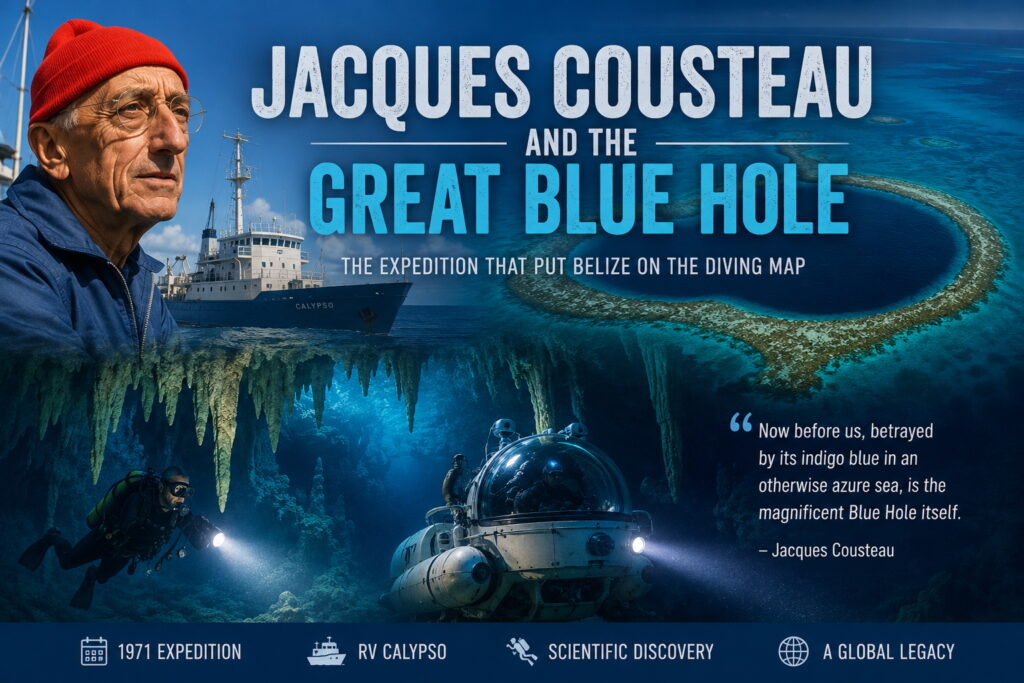
Illustration of Jacques Cousteau, the research vessel Calypso, and Belize's Great Blue Hole at Lighthouse Reef Atoll, highlighting the famous 1971 expedition that helped bring global attention to the Blue Hole.
Jacques Cousteau's 1971 expedition aboard the Calypso helped introduce Belize's Blue Hole and Lighthouse Reef Atoll to the world, inspiring generations of divers and marine explorers.

Before Cousteau Arrived

Long before the Calypso reached Belize, local fishermen, sailors, and a small number of divers already knew about the circular blue opening in the middle of Lighthouse Reef Atoll.

The site had appeared in diving publications during the 1960s, and underwater filmmaker Al Giddings had already documented reefs in what was then called British Honduras.

The Blue Hole was not unknown.

It was simply unknown to most of the world.

That would soon change.

A Mystery Beneath the Reef

As the expedition descended into the Blue Hole, they discovered massive stalactites hanging from submerged cave chambers.

These formations could only have formed in air.

The discovery confirmed that the Blue Hole had once been part of an above-water cave system before rising seas flooded it thousands of years ago.

Today, those same stalactites remain one of the most memorable parts of the dive.

For many divers, seeing them is like looking directly into Belize’s prehistoric past.

What Cousteau Actually Said

One of the challenges in researching the Great Blue Hole is separating fact from repetition.

Many websites claim Cousteau called the site one of the world’s top dive destinations, but few provide the original source.

Fortunately, some of Cousteau’s own words survive from the television documentary Secrets of the Sunken Caves.

As the expedition approached Lighthouse Reef, Cousteau described the scene:

“Now before us, betrayed by its indigo blue in an otherwise azure sea, is the magnificent Blue Hole itself.”

Preparing to investigate the underwater cavern, he explained:

“We would need the whole arsenal of Calypso’s diving gear to probe the mystery of this deep blue cavern in the floor of the sea.”

For Cousteau, the Blue Hole was more than a dive site.

It was a scientific mystery waiting to be explored.

Experience the Magical Thrill of Diving in the Great Blue Hole in Belize

The Myth of the Name

Many people believe Jacques Cousteau named the Great Blue Hole.

He did not.

When Cousteau visited in 1971, the site was simply known as a blue hole, a term used throughout the Caribbean for similar geological formations.

The specific name “Great Blue Hole” was later popularized by British diver and author Ned Middleton in 1988.

What Cousteau did do was introduce the site to a global audience.

His television programs reached millions of viewers around the world and helped establish Belize as a destination for adventurous divers.

15 Interesting Facts About Great Blue Hole You Didn’t Know

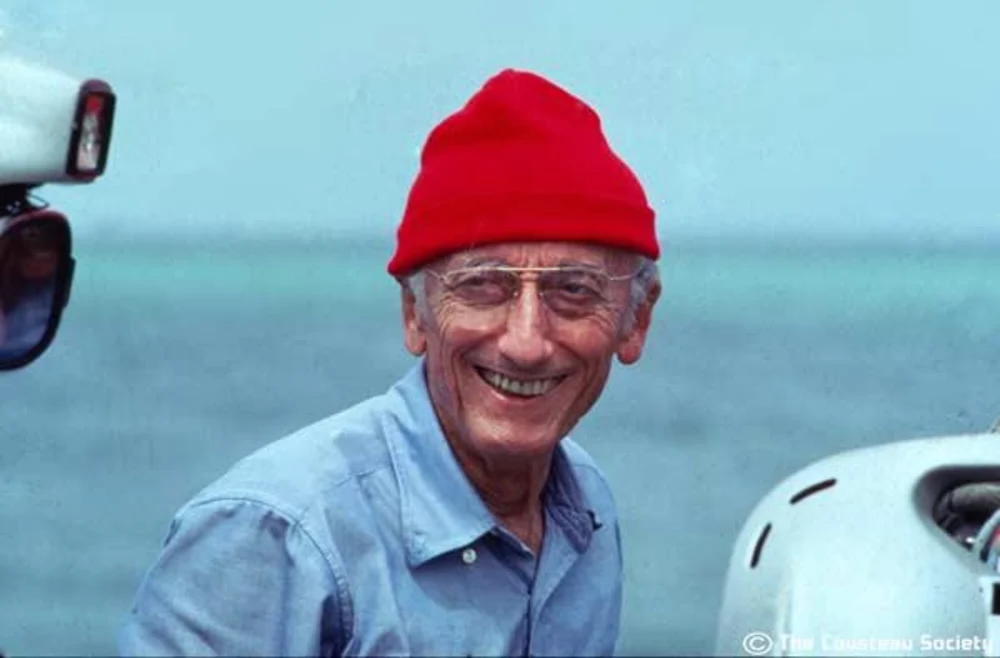
Jacques Cousteau aboard the research vessel Calypso during the 1971 expedition that helped make Belize's Great Blue Hole internationally famous.
Jacques Cousteau aboard the Calypso. His 1971 expedition to Lighthouse Reef Atoll helped introduce Belize's Blue Hole to divers and explorers around the world.

Why the Expedition Matters Today

Without the 1971 expedition, the Great Blue Hole might still be known primarily within diving circles.

Cousteau’s combination of science, storytelling, and exploration brought international attention to Lighthouse Reef Atoll at a time when very few people had even heard of Belize.

His work helped reveal:

  • The Blue Hole’s ancient cave origins
  • Evidence of past Ice Age sea levels
  • Massive underwater stalactite formations
  • The geological history of Lighthouse Reef Atoll

More than fifty years later, those discoveries continue to shape how divers experience the site.

Archive info

From Jacques to Fabien

In 2018, Jacques Cousteau’s grandson, Fabien Cousteau, returned to the Great Blue Hole as part of a major scientific expedition.

Using technology that did not exist in 1971, researchers created detailed three-dimensional maps of the Blue Hole and explored depths beyond recreational diving limits.

In many ways, the expedition continued the work that began aboard Calypso nearly half a century earlier.

The questions had become more advanced.

The fascination remained the same.

Top 10 Dive Sites Around the World Divers Never Forget

Experience the Blue Hole from Lighthouse Reef Atoll

One detail often overlooked in the Cousteau story is that the Great Blue Hole is only one part of Lighthouse Reef Atoll.

The surrounding reefs, walls, coral formations, and marine ecosystems are what make this corner of Belize truly remarkable.

At Itza Resort, guests stay directly on Lighthouse Reef Atoll itself.

Instead of spending hours traveling from the mainland, divers wake up surrounded by the same reef system that captivated Jacques Cousteau in 1971.

The Blue Hole may be the icon.

But Lighthouse Reef is the experience.

Tips for Visiting and Diving Belize Blue Hole

Final Thoughts

Jacques Cousteau did not discover the Blue Hole.

He did not name it.

What he did was something arguably more important.

He documented it.

He helped explain how it formed.

And through his films and books, he introduced one of Belize’s greatest natural wonders to the world.

More than fifty years later, divers still come to Lighthouse Reef Atoll following a trail first charted by the crew of the Calypso.

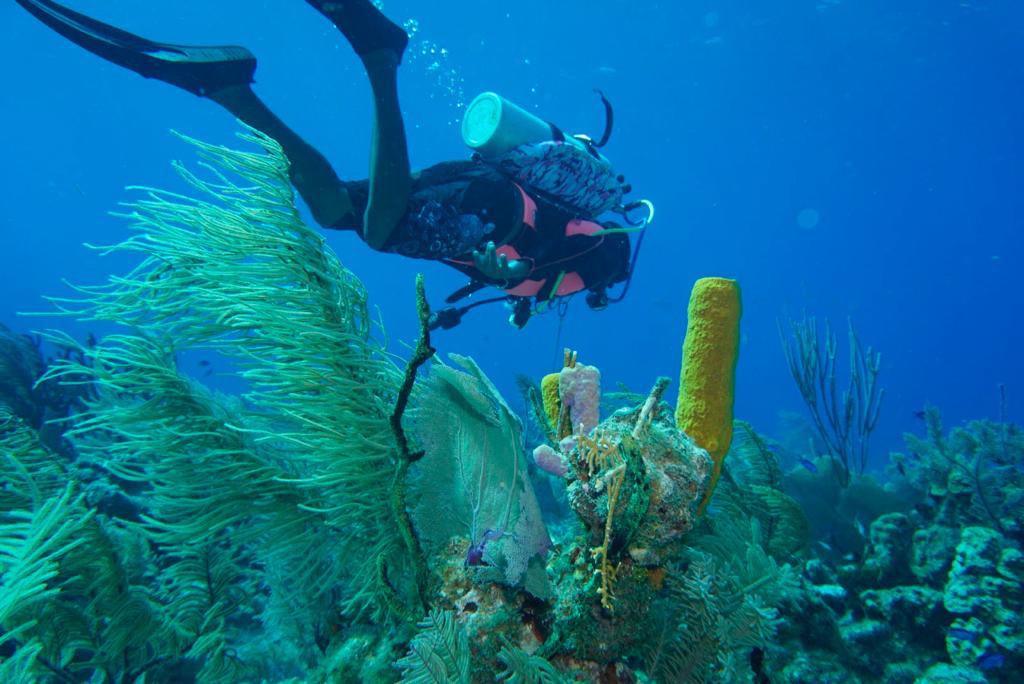
View from behind Elvis Solis scuba diving over a healthy Belize reef with orange sponges, sea fans, coral formations, and small tropical fish at Lighthouse Reef Atoll.

Who This Is For / Not For

✔ Certified divers
✔ Small groups / couples
✔ Reef-focused travelers

✖ Luxury seekers
✖ Non-divers
✖ Nightlife travelers

Before You Come

  • Sea breeze + standing fans, Built for reef life
  • 2 hours offshore on Lighthouse Reef Atoll
  • Surface intervals back at the resort

Why Itza Is Different

Why Divers Choose Itza
  • Wake up already on Lighthouse Reef
  • More reef time. Less boat traffic.
  • More dives per day
  • No crowds between you and the reef.

Next Step

Plan Your Dive Trip

→ Dive Packages
→ Blue Hole vs Ambergris
→ Real Cost of a Dive Trip
→ What It’s Like Staying Here

Ready to Plan Your Stay?

Get exact availability, pricing, and dive options based on your dates.

Check Availability or Get a Package Quote

1