
The Great Blue Hole is one of the most photographed natural wonders in the world.
From the air, it appears as a perfect dark blue circle surrounded by the turquoise waters of Lighthouse Reef Atoll, Belize. Divers travel thousands of miles to descend into its depths, while travelers who never put on scuba gear often recognize it from documentaries, travel magazines, and stunning aerial photographs.
But there is much more to the Great Blue Hole than its famous appearance.
Many people also don’t realize that Long Caye, located within Lighthouse Reef Atoll, played a small role in Blue Hole history. During Jacques Cousteau’s famous 1971 expedition, members of his team spent time on the island while exploring and documenting the Great Blue Hole.
Whether you’re planning a trip to Belize, considering a Blue Hole dive, or simply curious about one of the world’s most famous marine sinkholes, these fascinating facts will help you better understand what makes the Great Blue Hole so unique.
Here are 15 interesting facts about the Great Blue Hole that many people don’t know.
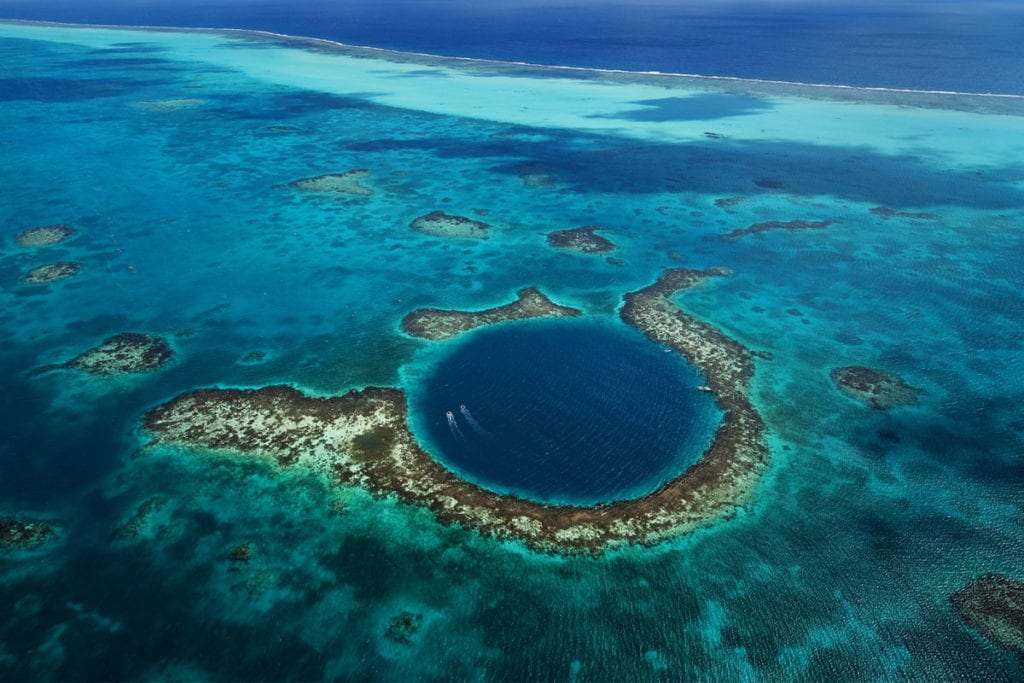
At its deepest point, the Great Blue Hole reaches approximately 125 meters (410 feet).
The strange thing?
The world’s most famous blue hole isn’t the deepest.
→ Find out why Belize’s Blue Hole became more famous than deeper blue holes around the world
Geological studies suggest the formation of the Great Blue Hole started more than 150,000 years ago.
Back then, sea levels were much lower, and this area was part of a vast limestone landscape filled with caves. Over time, natural processes shaped the chamber that would eventually become the Blue Hole.
Before it was flooded, the Great Blue Hole was an inland cave.
As glaciers melted and sea levels rose at the end of the last Ice Age, the cave system filled with water — preserving massive stalactites and formations that still exist today deep below the surface.
Learn more about What Is the Great Blue Hole
One of the most fascinating things divers encounter inside the Blue Hole is giant stalactites.
These formations could only have developed in air — not underwater — which confirms that the cave existed long before it was submerged.
Some of these structures are massive, hanging silently in the darkness hundreds of feet below.
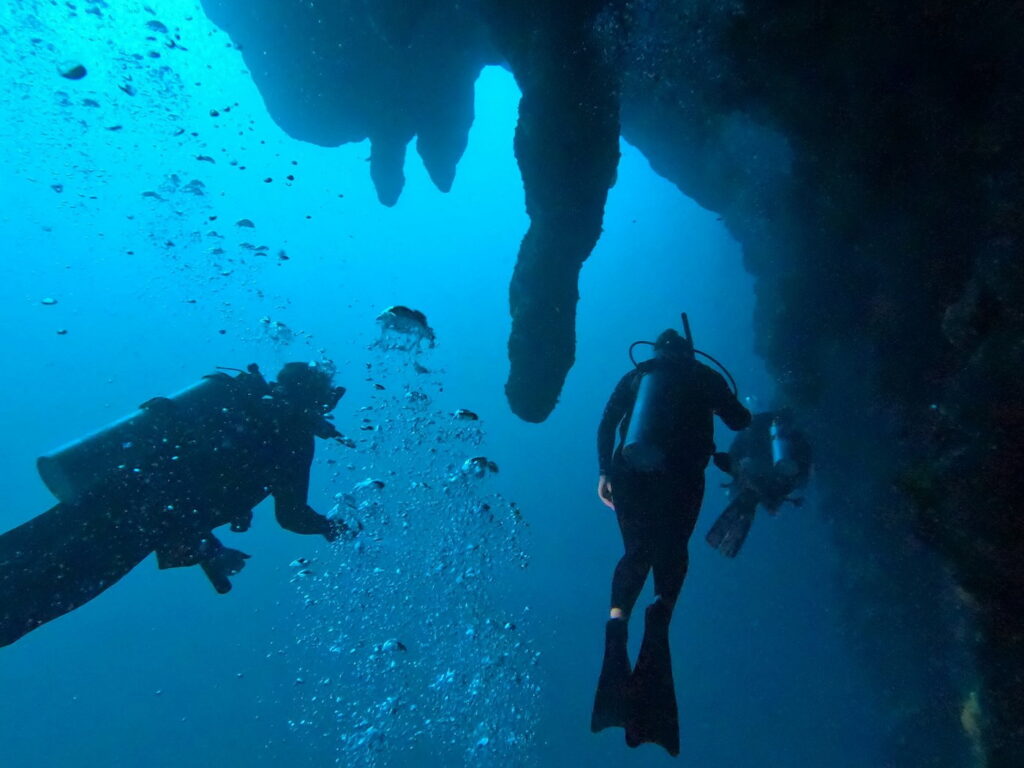
This is what most people never see — the part of the Great Blue Hole that exists below the surface.
The Blue Hole is famous — but it’s not the dive most people remember most.
→ See the best diving around the Blue Hole
The Great Blue Hole is located in the center of Lighthouse Reef Atoll, one of only three atolls in Belize.
This places it within the larger Belize Barrier Reef system, a UNESCO World Heritage Site and one of the most important marine ecosystems in the world.
What many travelers don’t realize is that the Great Blue Hole is only one part of a much larger marine environment.
Lighthouse Reef Atoll is not just a location marker on a map.
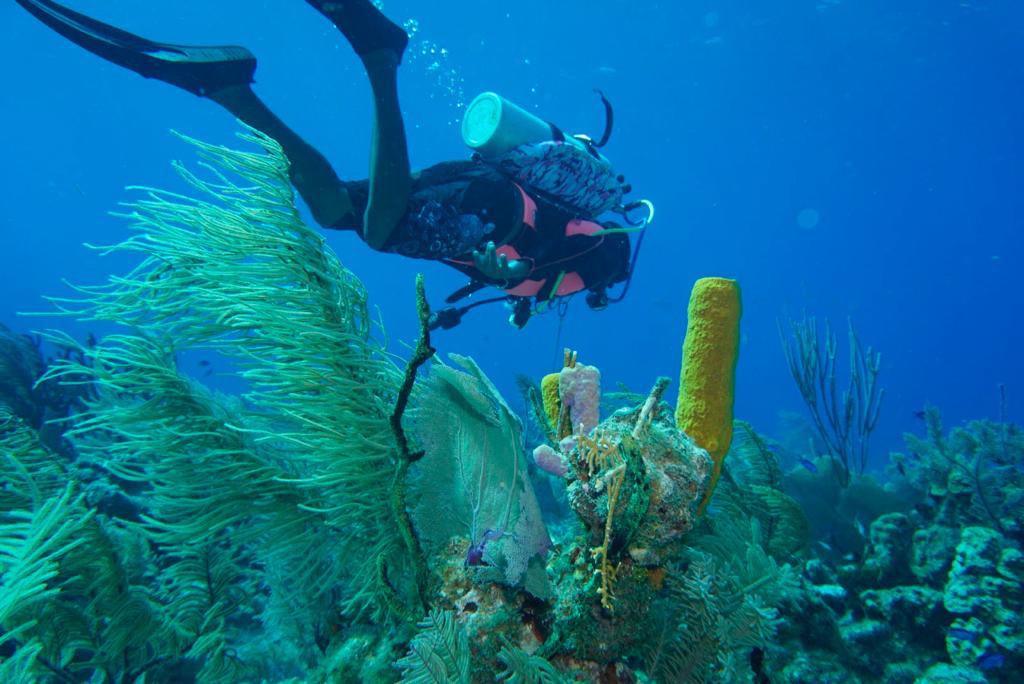
It’s an offshore coral atoll surrounded by reef walls, sea fans, coral gardens, drop-offs, and marine life that many divers remember even more than the Blue Hole itself.
This is also part of why staying on Lighthouse Reef changes the experience.
Most visitors only arrive for a few hours before returning to the mainland or islands.
But out here, you begin to understand the rhythm of the reef itself:
the changing light,
the open sea conditions,
the quiet between dives,
and how isolated the atoll really feels once the day boats leave.
That context changes how people experience the Great Blue Hole.
It stops feeling like a tourist attraction —
and starts feeling like part of a much larger marine world.
When Jacques Cousteau arrived at Lighthouse Reef Atoll in 1971 aboard the Calypso, the Blue Hole was already known to local fishermen and divers.
What made his expedition important was not discovery—it was documentation.
Cousteau’s team investigated the Blue Hole’s geology, explored its underwater cave chambers, and helped confirm that it had once been a dry cave system before rising sea levels flooded it thousands of years ago.
His television documentary introduced the site to millions of viewers around the world and helped establish Belize as a world-class diving destination.
→ Read the full story: Jacques Cousteau and the Great Blue Hole
This surprises many people.
Unlike the surrounding reef, the interior of the Blue Hole has limited marine life, especially at deeper levels. The real attraction is not coral or fish — it’s the geological structure and the experience of descending into it.
This surprises many first-time visitors.
The Blue Hole itself is often the most famous dive —
but not always the favorite.
Many divers later talk more about:
The Blue Hole is the icon.
But Lighthouse Reef is what makes the experience complete.
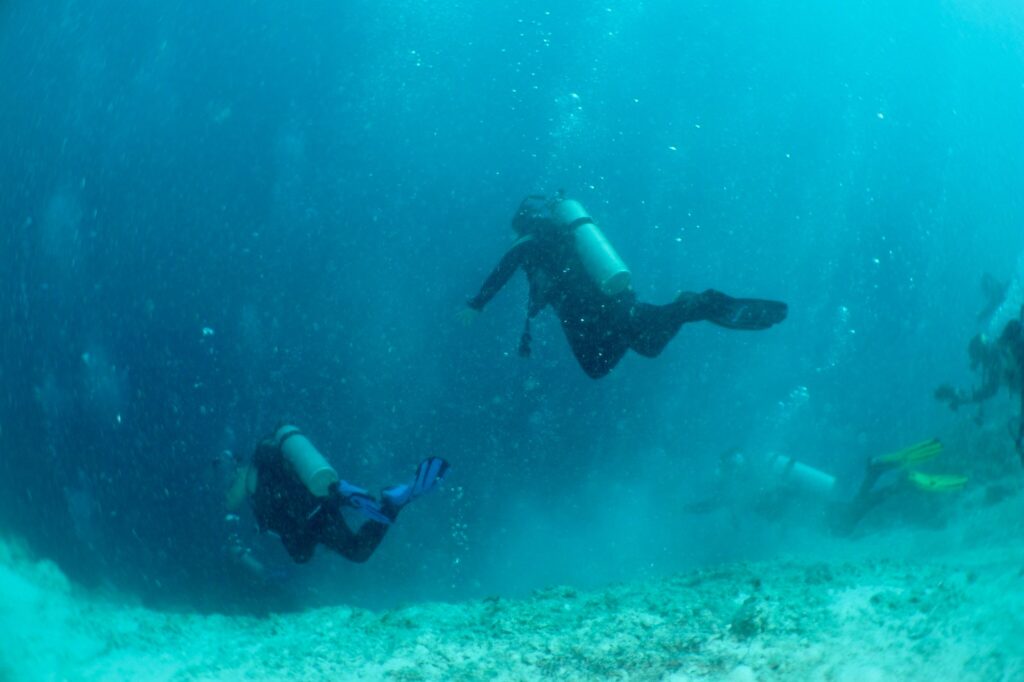
While the deeper sections are relatively quiet, divers may encounter Caribbean reef sharks, nurse sharks, or other species in the surrounding waters.
These sightings are never guaranteed — but they add to the sense of entering a wild, open marine environment.
The Great Blue Hole is not ideal for beginners.
Most dive operators require:
This is because of the depth, conditions, and planning required to safely complete the dive.
Most visitors focus on the depth, history, and marine life of the Great Blue Hole.
What many don’t realize is that timing can also influence the experience.
Because the Great Blue Hole is located approximately 43 miles offshore from Belize City and about 55 miles from Ambergris Caye, reaching the site requires a significant boat journey from most mainland and island destinations.
Many mainland dive boats depart before sunrise and may travel nearly two hours to reach the Blue Hole, while boats departing from Ambergris Caye often face similarly long travel times.
Resorts located directly on Lighthouse Reef Atoll are much closer to the Blue Hole and surrounding dive sites.
Guests staying on Lighthouse Reef Atoll are often among the first divers to enter the water, sometimes completing much of their dive before boats arriving from the mainland or Ambergris Caye reach the site.
This can mean:
While weather and daily operations always influence conditions, many experienced divers appreciate being among the first boats at the Great Blue Hole.
Many people assume the name came from Jacques Cousteau.
It didn’t.
When Cousteau visited in 1971, the site was simply known as a blue hole.
The name “Great Blue Hole” was later popularized by British diver and author Ned Middleton in 1988.
The name helped distinguish Belize’s famous sinkhole from the many other blue holes found throughout the Caribbean.
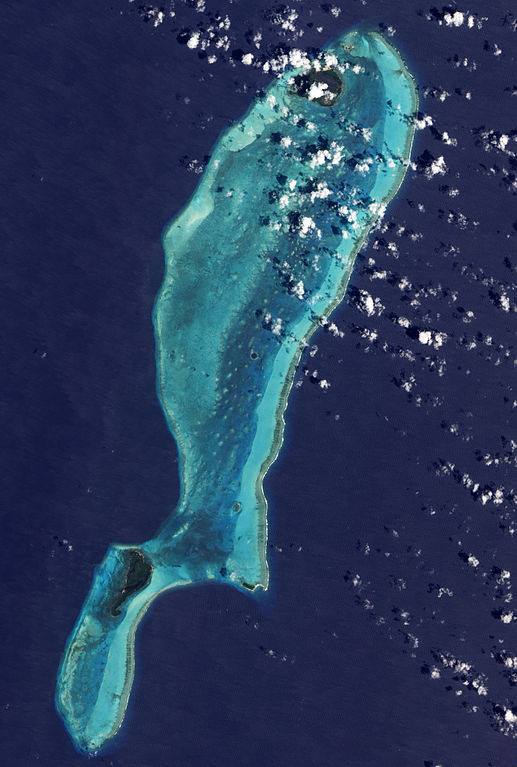
Many first-time visitors assume the Great Blue Hole is located near Belize City or the mainland coast.
In reality, it lies within Lighthouse Reef Atoll, approximately 50 miles (80 km) offshore. This remote location helps preserve the surrounding marine environment and contributes to the area’s exceptional water clarity.
Recreational divers typically descend to around 130–140 feet before beginning their ascent. The deepest parts of the Blue Hole remain well beyond normal recreational diving limits.
Many visitors are surprised to learn that a Blue Hole trip is usually not just about the Blue Hole.
The excursion commonly includes additional dives at sites such as Half Moon Caye Wall and Long Caye Aquarium. In fact, many experienced divers say the surrounding reef dives become their favorite part of the day.
Most visitors experience the Great Blue Hole as a long day trip.
Guests staying on Lighthouse Reef Atoll enjoy a different rhythm. Shorter boat rides, more reef time, spectacular sunsets, stargazing, and the feeling of living on the atoll itself often become just as memorable as the Blue Hole dive.
The Great Blue Hole is often seen as a bucket-list photo.
But it’s more than that.
It’s a place shaped over thousands of years — where caves became ocean, and where what you see from the surface is only a small part of the story.
Understanding what’s beneath it changes how you experience it.
The Great Blue Hole is famous for its depth and geology — but the experience feels very different once you’re actually out there.
For a broader look at what the Blue Hole is, how it formed, snorkeling vs diving, and why it matters to Belize beyond just diving, read:
→ The Blue Hole of Belize: What It Is, How to See It, and Why It Matters
That perspective becomes even more meaningful once you experience the Blue Hole from Lighthouse Reef itself.
The Great Blue Hole also appeared repeatedly in global diver discussions about unforgettable dives.
The Great Blue Hole sits far offshore in open Caribbean waters.
That means:
can completely change the experience from one day to another.
Some mornings are calm and glassy.
Other days involve rough crossings, changing visibility, or strong open-water movement between reef systems.
This is one reason experienced dive crews plan carefully around:
It’s also why staying directly on Lighthouse Reef often creates a very different experience compared to making a long day trip from the mainland.
If you’re thinking about diving the Great Blue Hole, where you stay—and who you dive with—makes a bigger difference than most people realize.
The Blue Hole is not just about the dive itself.
How you experience Lighthouse Reef changes everything.
At Itza Resort, you’re not doing a long, rushed day trip from the mainland or Ambergris Caye.
You’re already out here—on Lighthouse Reef.
That changes everything.
And just as important:
👉 you’re diving it with a crew that knows this atoll, not just visits it.
The same team guiding you through the Blue Hole is the one taking you along Half Moon Caye walls, reef systems, and repeat dives throughout your stay.
So instead of a single “bucket list” moment…
👉 it becomes part of a larger, connected diving experience.
If you’re looking to experience the Blue Hole from the inside—not just fly over it—this is something worth planning carefully.
Because the dive itself is only part of it.
👉 how you access it is what shapes the entire experience.
If you’re thinking about actually experiencing this in person:
→ Is Itza Resort worth it?

✔ Certified divers
✔ Small groups / couples
✔ Reef-focused travelers
✖ Luxury seekers
✖ Non-divers
✖ Nightlife travelers

Plan Your Dive Trip
→ Dive Packages
→ Blue Hole vs Ambergris
→ Real Cost of a Dive Trip
→ What It’s Like Staying Here
Ready to Plan Your Stay?
Get exact availability, pricing, and dive options based on your dates.